

7 Ideen für Wandkunst im Wohnzimmer, um Ihren Raum schnell zu verwandeln
Eine leere Wand ist vergeudetes Potenzial. Das richtige Kunstwerk kann die gesamte Stimmung eines Raumes verändern und ihn wärmer, mutiger oder mehr nach Ihnen wirken lassen. Aber das endlose Durchscrollen von Wandkunstideen für das Wohnzimmer kann überwältigend sein, wenn man nicht sicher ist, was im eigenen Raum wirklich funktioniert. Die gute Nachricht? Sie brauchen keinen Innenarchitekten, um es richtig zu machen.
Dieser Leitfaden zerlegt sieben verschiedene Ansätze für Wandkunst, von Statement-Leinwänden bis hin zu modernen Acrylglasbildern, damit Sie eine Richtung finden können, die zu Ihrem Stil passt, und diese selbstbewusst umsetzen können. Egal, ob Sie zu dunklen und dramatischen Themen neigen oder etwas Natürliches und Beruhigendes bevorzugen, hier gibt es ein Konzept, das es wert ist, übernommen zu werden. Bei Yourwallarts haben wir aus erster Hand erfahren, wie der richtige Druck auf dem richtigen Material, Leinwand oder Acrylglas, das Gefühl eines Raumes komplett verändert. Diese Ideen spiegeln wider, was wirklich funktioniert.
Legen wir los.
1. Beginnen Sie mit einem sofort aufhängebaren Statement-Print
Wenn Sie schnelle Ergebnisse erzielen möchten, ist ein sofort aufhängbarer Statement-Print Ihr bester Ausgangspunkt. Er erfordert keine Styling-Expertise, keine zusätzliche Hardware-Beschaffung und keine zweite Vermutung. Sie wählen ein starkes Stück, hängen es auf, und der Raum hat sofort einen Blickfang. Dies ist eine der effektivsten Wandkunstideen für das Wohnzimmer, die Sie an einem einzigen Nachmittag umsetzen können.
Was einen Statement-Print schnell wirken lässt
Ein Statement-Print funktioniert, weil er die visuelle Arbeit für Sie erledigt. Er zieht den Blick auf einen Punkt, verankert den Raum und eliminiert die Frage, was der Wand fehlt. Kühne Motive, starke Kontraste und eine klare Komposition sind die drei Elemente, die einen einzelnen Druck beabsichtigt statt zufällig wirken lassen.
Wo Sie ihn für die größte Wirkung platzieren sollten
Die effektivste Platzierung ist direkt über Ihrem Hauptsitzbereich oder an der Wand, die Sie zuerst sehen, wenn Sie den Raum betreten. Diese erste Wand gibt den Ton für alles andere an. Vermeiden Sie es, Kunst in Ecken oder an Wänden aufzuhängen, die durch Türrahmen und Möbel abgeschnitten werden.
Die Eingangswand und die Wand hinter dem Sofa sind die beiden wirkungsvollsten Orte in jedem Wohnzimmer.
Wie Sie das richtige Thema für Ihr Zimmer auswählen
Passen Sie die Stimmung der Kunst an die Stimmung an, die Sie im Raum wünschen. Ein Wikinger- oder dunkel-dramatischer Druck erzeugt Intensität und visuelles Gewicht. Ein Tier- oder Naturdruck mildert den Raum. Ihr Thema sollte mit etwas verbunden sein, das Sie wirklich mögen, nicht nur mit dem, was in jemand anderem Zuhause beliebt aussieht.
Größen- und Abstandsregeln, die zu befolgen sind
Ihr Druck sollte mindestens zwei Drittel der Breite der Wand einnehmen, an der er hängt. Lassen Sie 15 bis 20 cm Platz zwischen der Unterseite des Rahmens und den darunter stehenden Möbeln. Zu klein zu wählen ist der häufigste Fehler, den Menschen bei Statement-Kunst machen.
Leinwand vs. Acrylglas für ein Wohnzimmer
Leinwandbilder verleihen Wärme und Textur und passen gut zu traditionellen oder rustikalen Einrichtungen. Acrylglasbilder bieten schärfere Farbdetails und einen schlanken, zeitgenössischen Look. Beide Formate werden fertig zum Aufhängen geliefert.
Budgetbereich und was den Preis verändert
Rechnen Sie mit 40 bis 150 Dollar für einen hochwertigen Statement-Print. Die Größe treibt den größten Teil des Preisanstiegs an, wobei die Materialwahl der zweitwichtigste Faktor ist.
2. Verwenden Sie ein überdimensionales Stück über dem Sofa
Die Sofawand ist die wertvollste Fläche in Ihrem Wohnzimmer, und ein einzelner überdimensionaler Druck ist eine der stärksten Wandkunstideen für das Wohnzimmer, die Sie heute anwenden können. Ein großes Stück erzeugt mehr visuelle Wirkung als mehrere kleine, die zusammen gruppiert sind, und es erfordert weitaus weniger Aufwand, es richtig zu machen.
Wann überdimensionale Kunst am besten aussieht
Überdimensionale Kunst wirkt am besten in Räumen mit hohen Decken und langen Wänden, wo ein kleineres Stück verloren wirken würde. Wenn Ihr Sofa länger als 1,5 Meter ist, übertrifft ein großformatiger Druck kleinere Alternativen in Bezug auf die Präsenz fast immer.
Wie man die Größe der Kunst an das Sofa anpasst
Ihre Kunst sollte ungefähr zwei Drittel der Breite Ihres Sofas messen. Für ein 2,1 Meter langes Sofa bedeutet das einen Druck von etwa 142 cm Breite. Eine geringere Breite lässt die Wand unvollendet wirken, unabhängig davon, wie gut der Druck ist.
Das Anpassen der Kunstbreite an die Sofabreite ist der schnellste Weg, ein Wohnzimmer bewusst gestaltet aussehen zu lassen.
Höhe, Zentrierung und die 57-Zoll-Regel
Hängen Sie die Mitte Ihres Kunstwerks 57 Zoll (ca. 145 cm) vom Boden entfernt auf, was der normalen Augenhöhe entspricht. Halten Sie 15 bis 20 cm Abstand zwischen der Oberseite Ihres Sofas und der Unterseite des Rahmens.
Rahmen- und Farbauswahl, die beabsichtigt wirkt
Wählen Sie eine Rahmenfarbe, die einen vorhandenen Ton im Raum widerspiegelt, wie z.B. Ihre Möbelfüße oder Metall-Lampen. Dies verbindet das Stück mit dem Raum, anstatt es zufällig platziert wirken zu lassen.
Leinwand vs. Acrylglas für Großformate
Leinwand eignet sich gut für Großformate, ohne übermäßiges Wandgewicht hinzuzufügen. Acrylglas in großen Größen liefert ein dramatisches, hochglänzendes Ergebnis, das besonders gut zu modernen und minimalistischen Räumen passt.
Budgetbereich und was den Preis verändert
Großformatige Drucke kosten typischerweise 80 bis 200 Dollar, wobei die Größe der Hauptpreistreiber ist. Die Materialwahl erhöht den Grundpreis um etwa 20 bis 30 Prozent.
3. Bauen Sie eine saubere, moderne Galeriewand auf
Eine Galeriewand ist eine der flexibelsten Wandkunstideen für das Wohnzimmer, die Sie ausprobieren können, aber sie funktioniert nur, wenn Sie das Layout planen, bevor Sie mit dem Hämmern beginnen. Eine klare Struktur ist das, was eine kuratierte Galeriewand von einer chaotischen unterscheidet.
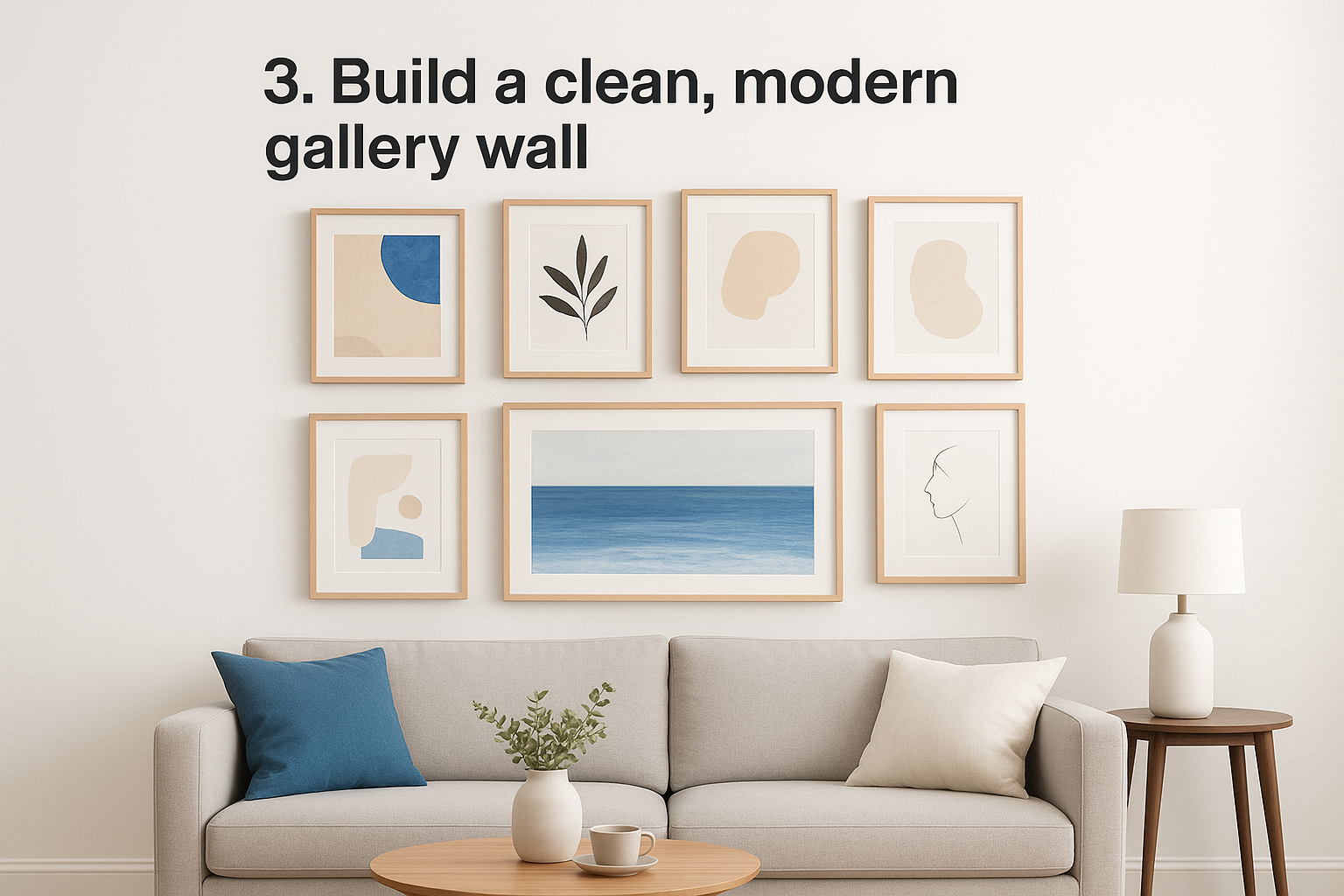
Wählen Sie einen Layout-Stil, der kohärent bleibt
Wählen Sie ein Layout und bleiben Sie dabei. Rasterlayouts funktionieren am besten für moderne und minimalistische Räume, während Salon-ähnliche Anordnungen zu eklektischen Räumen passen. Die Entscheidung für Ihr Layout, bevor Sie etwas kaufen, verhindert, dass die gesamte Wand auseinanderfällt.
Wählen Sie eine Farbpalette, die den Raum verbindet
Beschränken Sie Ihre Palette auf zwei oder drei Farben, die aus Ihren vorhandenen Möbeln oder Teppichen stammen. Das Wiederholen dieser Töne in jedem Stück lässt die Anordnung gestaltet und nicht zufällig wirken.
Ein gemeinsamer Farbstrang verbindet eine Galeriewand mehr als passende Rahmen.
Mischen Sie Größen, ohne es unordentlich wirken zu lassen
Verankern Sie die Anordnung mit einem größeren Mittelstück und bauen Sie dann mit kleineren unterstützenden Stücken nach außen. Vermeiden Sie die Verwendung der gleichen Größe, da dies das visuelle Interesse abflacht und die Wand statisch wirken lässt.
Abstand, Ausrichtung und Aufhängeschablonen
Halten Sie 5 bis 7,5 cm Abstand zwischen jedem Rahmen. Schneiden Sie Papierschablonen aus und kleben Sie diese an die Wand, bevor Sie Nägel einschlagen.
Wie man Fotos, Drucke und Illustrationen mischt
Das Mischen von verschiedenen Druckarten verleiht Tiefe, aber die Konsistenz der Rahmenstile hält die Anordnung optisch zusammen.
Budgetbereich und was den Preis verändert
Galeriewände kosten typischerweise insgesamt 100 bis 300 Dollar, je nachdem, wie viele Stücke Sie einbeziehen und ob Sie Leinwand- oder Acrylglasbilder wählen.
4. Schichten Sie Kunst auf Bilderleisten für eine einfache Auffrischung
Bilderleisten sind eine der am meisten unterschätzten Wandkunstideen für das Wohnzimmer. Sie ermöglichen es Ihnen, mehrere Stücke gleichzeitig auszustellen, ohne sich auf eine feste Anordnung festlegen zu müssen, was Ihnen eine echte Flexibilität gibt, den Raum jederzeit zu aktualisieren.
Warum Leisten nagelintensive Aufbauten schlagen
Traditionelles Aufhängen hinterlässt jedes Mal Löcher in Ihrer Wand, wenn Sie Ihre Meinung ändern. Bilderleisten eliminieren dieses Problem vollständig, indem sie es Ihnen ermöglichen, Drucke auszutauschen, zu verschieben und neu anzuordnen, ohne einen einzigen Nagel zu berühren. Dies macht sie ideal für jeden, der seine Einrichtung saisonal auffrischt oder sich noch nicht vollständig auf ein permanentes Layout festgelegt hat.
Wie man Schichten ohne Unordnung stilisiert
Schichten Sie Rahmen, indem Sie höhere Stücke hinten und kürzere davor platzieren. Beschränken Sie jede Leiste auf zwei oder drei Objekte, damit die Anordnung lesbar bleibt und nicht überladen wirkt.
Zurückhaltung ist wichtiger als Vielfalt, wenn Sie eine Leiste stilisieren.
Beste Leistenlängen und wie viele zu verwenden sind
Eine einzelne Leiste von 90 bis 120 cm Länge funktioniert gut über einer Konsole oder einem Beistelltisch. Zwei gestapelte Leisten mit einem Abstand von 25 bis 30 cm funktionieren besser an einer größeren leeren Wand, die mehr Abdeckung benötigt.
Befestigen von Rahmen und Verhindern von Verrutschen
Fügen Sie kleine Gummipads oder Museumskitt unter jeden Rahmen hinzu, um ein Verrutschen der Teile zu verhindern. So bleibt Ihre Anordnung beabsichtigt und nicht zufällig, nachdem jemand vorbeigeht.
Saisonale Kunst in wenigen Minuten austauschen
Das Wechseln Ihrer Drucke dauert mit Leisten weniger als fünf Minuten. Halten Sie eine kleine Rotation von drei bis vier Ersatzdrucken in der Nähe bereit, damit der Austausch nie zu einem Projekt wird.
Budgetbereich und was den Preis verändert
Leisten kosten jeweils 15 bis 50 Dollar, und Kunstdrucke für die Leisten-Gestaltung liegen typischerweise zwischen 20 und 80 Dollar pro Stück, je nach Größe und Material.
5. Kombinieren Sie Wandkunst mit einem Statement-Spiegel
Die Kombination eines Spiegels mit Wandkunst ist eine der praktischsten Wandkunstideen für das Wohnzimmer, die Sie nutzen können, um zwei Probleme gleichzeitig zu lösen: visuelle Tiefe hinzufügen und natürliches Licht reflektieren. Ein gut platzierter Spiegel kann einen kleinen Raum deutlich größer wirken lassen, ohne die Wand zu überladen.
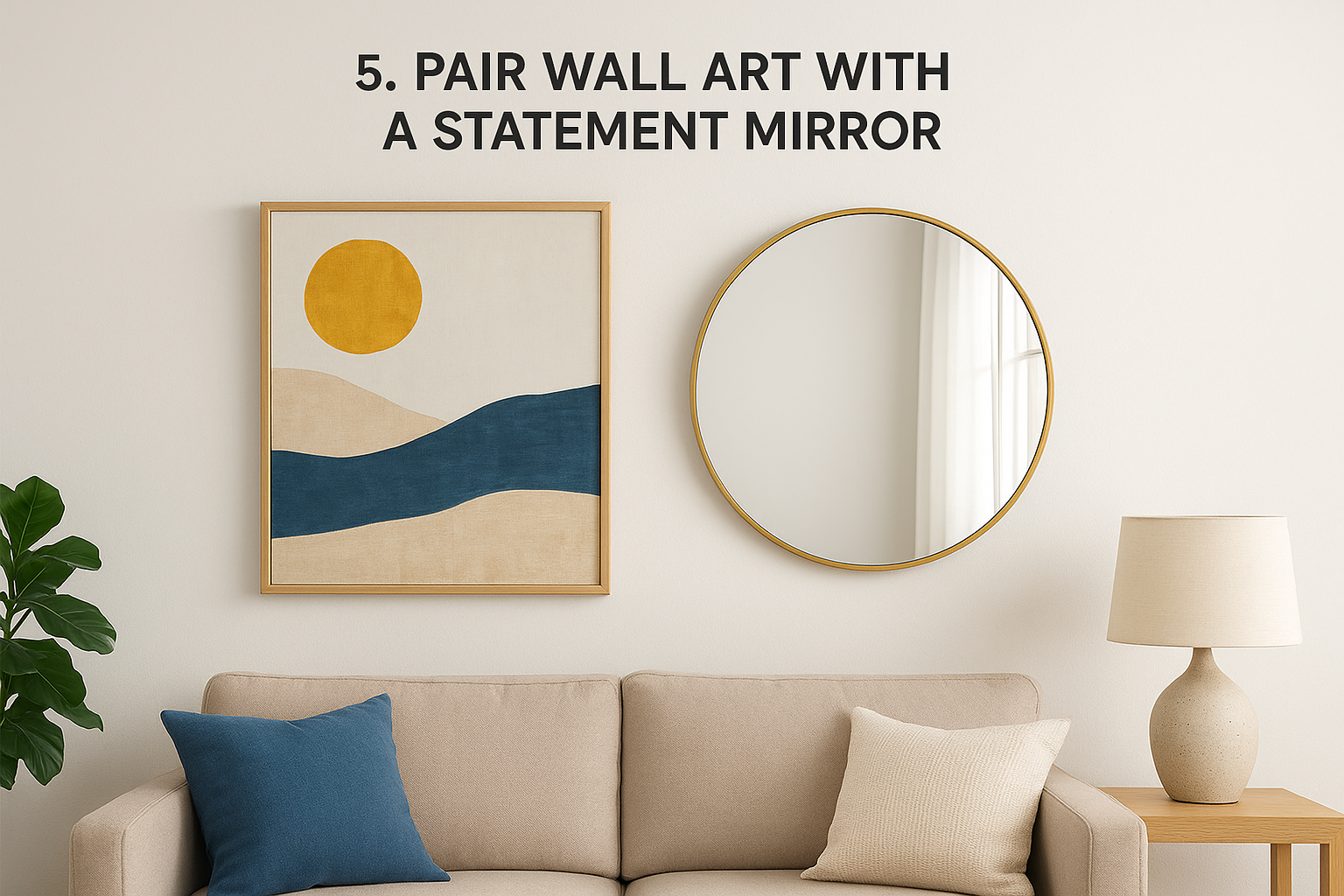
Wann ein Spiegel besser wirkt als mehr Kunst
Manchmal benötigt Ihre Wand Licht und Offenheit anstatt eines weiteren Drucks. Wenn Ihr Wohnzimmer dunkel oder eng wirkt, bewirkt ein großer Spiegel gegenüber einem Fenster weitaus mehr als jedes zusätzliche Kunstwerk.
Ein Spiegel, der gegenüber natürlichem Licht platziert wird, verdoppelt die Helligkeit eines Raumes, ohne eine einzige Leuchte hinzuzufügen.
Spiegelformen, die zu beliebten Wohnzimmerstilen passen
Runde Spiegel passen zu modernen und skandinavischen Einrichtungen, während gewölbte oder rechteckige Formen besser in traditionelle oder Übergangsräume passen. Passen Sie die Silhouette des Spiegels an die dominanten Formen an, die bereits in Ihren Möbeln vorhanden sind.
Platzierungsideen für Licht, Höhe und Balance
Hängen Sie Ihren Spiegel auf Augenhöhe, mittig an der Wand oder ausgerichtet mit einem benachbarten Kunstwerk. Positionieren Sie ihn so, dass er natürliches Licht von einem Fenster einfangen und reflektieren kann, anstatt einer leeren Wand zugewandt zu sein.
Blendung durch Glas und glänzende Oberflächen vermeiden
Halten Sie Acrylglasbilder und Spiegel mindestens 45 cm voneinander entfernt, um konkurrierende Reflexionen zu vermeiden. Kunst mit matter Oberfläche funktioniert besser neben einem Spiegel in einem hell beleuchteten Raum.
Wie man Rahmen und Metalle koordiniert
Passen Sie Ihren Spiegelrahmen an einen Metallton an, der bereits im Raum vorhanden ist, wie z.B. Leuchten oder Möbelfüße. Dies verbindet den Spiegel mit dem Raum, anstatt ihn zufällig hinzugefügt wirken zu lassen.
Budgetbereich und was den Preis verändert
Qualitätvolle Statement-Spiegel kosten 60 bis 200 Dollar, wobei die Komplexität der Form und das Rahmenmaterial den größten Teil des Preisunterschieds ausmachen.
6. Fügen Sie Textur mit 3D-Wandkunst und Wandobjekten hinzu
Glatte Wände mit nur gerahmten Drucken können eindimensional wirken, selbst wenn die Drucke von hoher Qualität sind. Das Hinzufügen von dreidimensionalen Wandobjekten zu Ihrer Ausstellung ist eine der weniger genutzten Wandkunstideen für das Wohnzimmer und verändert das Gefühl Ihres Raumes auf einer physischen Ebene.
Die schnellsten Textur-Upgrades für flache Räume
Gewebte Wandbehänge, skulpturale Metallpaneele und Keramik-Wandscheiben sind Ihre schnellsten Optionen, um eine glatte Oberfläche aufzulockern. Jedes davon fügt physische Tiefe hinzu, die kein bedrucktes Stück reproduzieren kann.
Was man außer gerahmten Drucken aufhängen kann
Denken Sie an Makramee, geschnitzte Holzpaneele, architektonische Spiegel und geometrische Metallskulpturen. Jedes Objekt, das einen Schatten an die Wand wirft, leistet nützliche visuelle Arbeit, die flache Drucke einfach nicht können.
Wie man verhindert, dass Texturen zufällig wirken
Beschränken Sie sich auf zwei oder drei Materialien für die gesamte Ausstellung. Das Wiederholen einer konsistenten Textur in verschiedenen Größen verbindet die Anordnung, ohne die Wand zu überladen.
Fettgedruckte Objekte mit ruhigerer Kunst ausbalancieren
Kombinieren Sie ein hochstrukturiertes Fokusstück mit flacheren, einfacheren Drucken auf beiden Seiten. Das Umgeben eines kühnen Objekts mit ruhigeren Elementen gibt dem Auge einen Ruhepunkt.
Ein stark strukturiertes Stück, umgeben von ruhigerer Kunst, erzeugt mehr Wirkung als mehrere konkurrierende Objekte, die um Aufmerksamkeit kämpfen.
Platzierungsideen für Ecken und schmale Wände
Schmale Wände zwischen Fenstern und enge Eckbereiche eignen sich gut für vertikale Skulpturen, die den Blick nach oben lenken, ohne den darunter liegenden Bodenbereich zu überladen.
Budgetbereich und was den Preis verändert
Dekorative Wandobjekte kosten typischerweise zwischen 25 und 150 Dollar. Handgefertigte Artikel und Naturmaterialien wie gewebte Fasern oder geschnitztes Holz liegen am oberen Ende dieser Spanne.
7. Gestalten Sie eine TV-Wand, die fertig aussieht
Die TV-Wand ist eine der kniffligeren Wandkunstideen für das Wohnzimmer, weil der Bildschirm mit allem um ihn herum konkurriert. Die Behandlung des Fernsehers als ein Element in einer größeren Komposition, anstatt als Mittelpunkt, unterscheidet eine fertige Wand von einer kahlen.
Lassen Sie den Fernseher wie einen Teil des Designs wirken
Die meisten TV-Wände scheitern, weil der Bildschirm allein auf einer kahlen Oberfläche steht. Das Umgeben Ihres Fernsehers mit Kunst, Regalen oder Objekten integriert ihn in die Wand und beseitigt das isolierte "schwarze Rechteck"-Gefühl, das entsteht, wenn sonst nichts den Raum in der Nähe einnimmt.
Kunstplatzierungen, die einen Bildschirm verstecken und ausbalancieren
Platzieren Sie symmetrische Kunstpaneele auf beiden Seiten des Bildschirms in gleicher Höhe, um ihn visuell einzurahmen. Vermeiden Sie es, Kunst direkt über einem montierten Fernseher aufzuhängen, da Hitze aufsteigt und Drucke mit der Zeit beschädigen kann.
Das Flankieren Ihres Bildschirms mit passenden Drucken ist der schnellste Weg, eine TV-Wand bewusst gestaltet aussehen zu lassen.
Verwendung von Regalen, Wandleuchten und Symmetrie mit Bedacht
Schwebende Regale unter dem Fernseher bieten Platz für Objekte, ohne den Bildschirm selbst zu überladen. Halten Sie Wandleuchten auf gleicher Höhe auf beiden Seiten, um die symmetrische Rahmung zu verstärken, die die Anordnung bewusst wirken lässt.
Kabel- und Geräteverdeckung, die einfach bleibt
Verlegen Sie Kabel durch einen Kabelkanal oder eine In-Wall-Leitung, um visuelle Unordnung zu vermeiden. Das Verstauen Ihrer Geräte in einem niedrigen Schrank hält die Wandkomposition sauber, ohne die Funktion zu beeinträchtigen.
Auswahl von blendfreien Oberflächen in der Nähe von Bildschirmen
Matte Leinwanddrucke funktionieren besser in der Nähe von Bildschirmen als Acrylglas, das Reflexionen vom Fernseher aufnimmt und störende Blendeffekte im selben Sehbereich erzeugt.
Budgetbereich und was den Preis verändert
Rechnen Sie mit 60 bis 180 Dollar für eine komplette TV-Wandinstallation, wobei symmetrische Druckpaare und Regale den größten Teil der Gesamtkosten ausmachen.
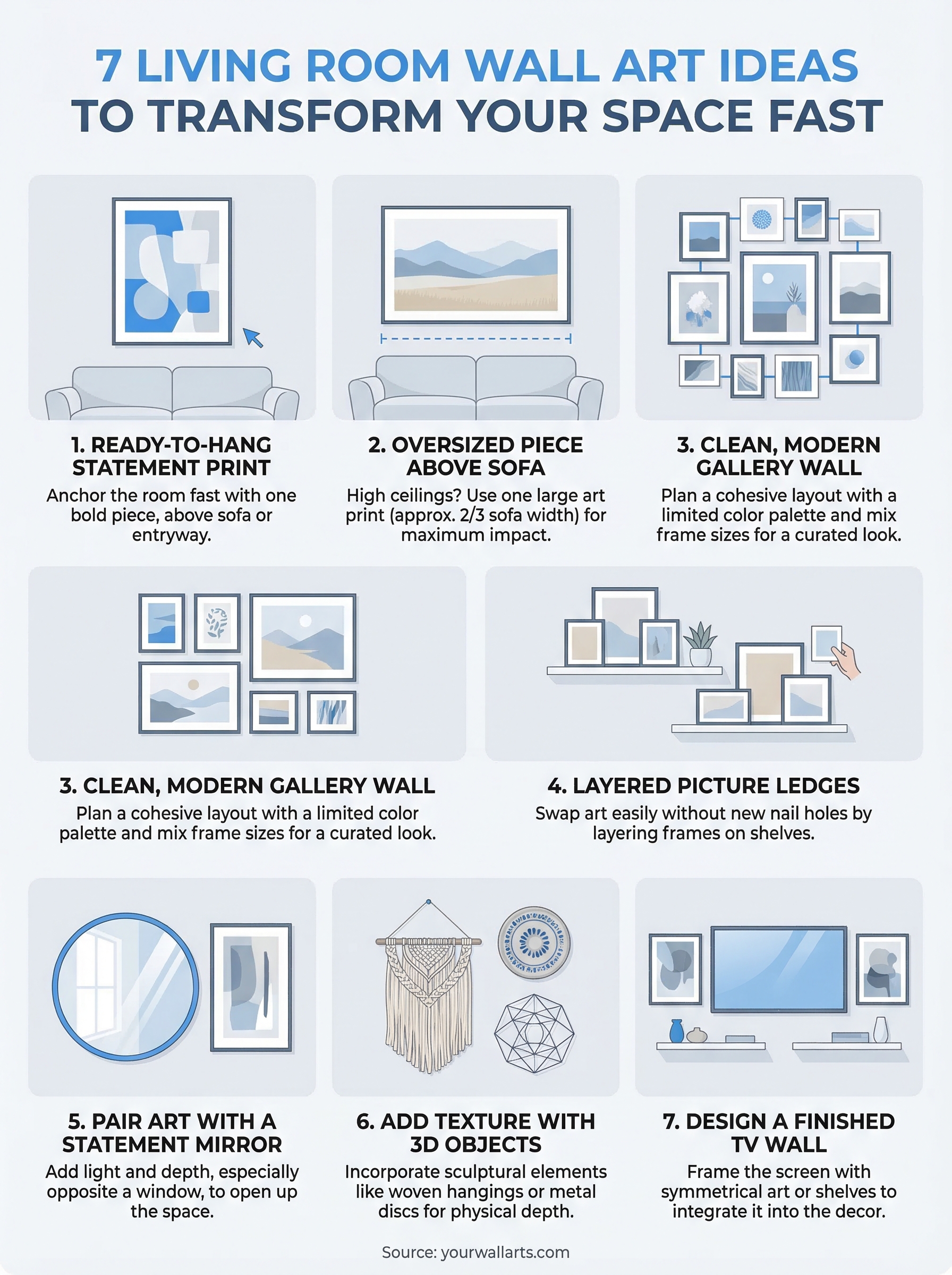
Nächste Schritte
Sie haben jetzt sieben konkrete Wandkunstideen für das Wohnzimmer zur Verfügung, jede davon an realen Räumen und realen Ergebnissen getestet. Der schnellste Schritt, den Sie machen können, ist, den einzelnen Ansatz zu wählen, der am besten zu Ihrem Raum passt, sei es ein Statement-Print über dem Sofa oder ein gestaffeltes Leistensystem, das Sie jederzeit neu anordnen können. Der Versuch, alle sieben auf einmal anzuwenden, wird Sie aufhalten. Wählen Sie einen, setzen Sie ihn vollständig um und bauen Sie darauf auf.
Ihre Wandkunst funktioniert nur so gut wie der Druck dahinter. Billige Materialien und schlechte Druckqualität untergraben selbst die besten Layout-Ideen. Wenn Sie Kunst wünschen, die auch in großen Formaten standhält und genaue Farben sowohl auf Leinwand als auch auf Acrylglas liefert, beginnen Sie mit der Durchsicht der Wandkunstdrucke bei Yourwallarts. Jede Bestellung wird kostenlos versandt und kommt fertig zum Aufhängen an, sodass Sie schneller von der Idee zur fertigen Wand gelangen, als Sie erwarten.