

8 Calming Wall Art for Bedroom Picks for a Serene Space
Your bedroom should feel like a retreat, a place where the day's noise fades the moment you walk in. One of the most effective (and often overlooked) ways to shape that atmosphere is through calming wall art for bedroom spaces. The right piece on the wall doesn't just fill empty space; it sets an emotional tone that influences how you rest, recharge, and unwind.
But finding art that genuinely calms rather than clutters takes some intention. Not every print belongs in a space designed for sleep and stillness. You want imagery and textures that lower the visual volume, soft palettes, open compositions, and subjects that invite quiet rather than demand attention.
That's where this list comes in. We pulled together eight wall art picks that bring a sense of serenity to any bedroom, whether your style leans minimal, nature-inspired, or somewhere in between. At Yourwallarts, we produce every piece as a made-to-order print on either canvas or acrylic glass, so each pick on this list arrives in gallery-quality detail, ready to hang straight out of the box. Let's get into it.
1. Yourwallarts made-to-order calming wall art
Yourwallarts builds every print specifically for your order, which means you receive fresh, high-resolution artwork on premium materials rather than a mass-produced poster sitting in a warehouse for months. That distinction matters when you're choosing calming wall art for bedroom spaces, because print quality and material finish directly affect the emotional tone a piece sets on your wall.
Why it calms a bedroom
The Yourwallarts catalog includes collections that lend themselves naturally to quiet, restful spaces. Themes like Animals and Mystical work especially well in bedrooms because they carry organic, unhurried energy. These aren't loud statement pieces fighting for attention; they're images that draw you in slowly and let your mind settle after a long day.
A print that rewards slow looking does more for a bedroom's atmosphere than one that makes an immediate visual impact.
How to pick colors and subject matter
When you browse the collections, focus on pieces with limited color ranges rather than maximalist compositions. Cool tones like blues, soft greens, and muted grays pair well with bedrooms because they lower the visual temperature of a room without making it feel cold. Subject matter matters too: solitary animals, open landscapes, and soft natural scenes tend to read as restful, while crowded or high-contrast imagery can feel energizing in ways that work against sleep.
Pick a piece whose mood matches how you want to feel when you wake up and when you wind down at night.
Where to hang it and what size to choose
For most bedrooms, the wall directly above the bed is the strongest placement. A single large print in the 60x90 cm or 80x120 cm range creates a focused anchor without overwhelming the space. If you have a smaller room or lower ceilings, a 40x60 cm piece on a side wall or opposite the bed keeps things feeling open rather than crowded.
Canvas vs acrylic glass and cost factors
Canvas prints have a warm, textured surface that absorbs light softly, which suits a bedroom's relaxed atmosphere particularly well. Acrylic glass delivers sharper detail and a glossy, contemporary finish that works better in rooms with clean-lined modern decor. Both options ship free and include everything you need to hang the piece immediately: canvas comes with a built-in hanging system, while acrylic glass arrives with a full kit and instructions included.
2. Misty landscapes and quiet horizons
A fog-draped valley or a horizon fading into pale sky carries a natural stillness that transfers directly to the room around it. Misty landscapes work as calming wall art for bedroom spaces because they give your eyes somewhere open and unhurried to rest.

Why it calms a bedroom
These scenes replace visual noise with depth and distance. When a composition stretches toward a horizon or dissolves into soft atmospheric haze, it creates the same kind of mental release you feel when you look out a wide window. Your brain registers open space and stops looking for things to process.
The more a piece suggests distance and openness, the more effectively it lowers the tension in a small or enclosed room.
How to pick colors and subject matter
Look for pieces where cool blues, pale grays, or muted greens dominate the palette. Morning mist scenes, forested ridgelines, and calm coastal horizons keep the mood quiet and unhurried. Avoid landscapes with dramatic storm skies or high-contrast lighting, because those pull energy up rather than settling it.
Where to hang it and what size to choose
The best placement is the wall facing your bed, where the scene becomes the last thing you see before sleep and the first thing you wake up to. A 60x90 cm or 80x120 cm print makes the landscape feel immersive without crowding the room.
Canvas vs acrylic glass and cost factors
Canvas suits misty landscapes well because its soft, light-absorbing texture mirrors the diffused quality of the imagery. Acrylic glass delivers crisper tonal contrast, which works if your bedroom leans toward a clean, modern finish.
3. Soft abstract neutrals and gentle brushwork
Soft abstract art sits in a unique category for calming wall art for bedroom spaces. It carries visual interest without demanding active interpretation, so you get something pleasing to look at without your brain latching onto a clear subject or narrative.
Why it calms a bedroom
Abstract pieces built on neutral palettes and loose brushwork work because they mirror the way a rested mind moves: without urgency and without fixed focus. Soft strokes in beige, off-white, sage, or dusty rose give your eyes something to follow without pulling them toward any single point in the composition.
Art that asks nothing of you is one of the most restorative things you can hang in a bedroom.
How to pick colors and subject matter
Look for pieces where the dominant tones stay close together on the palette, creating low contrast across the whole composition. Warm neutrals like cream, taupe, and warm gray pair well with natural wood furniture, linen bedding, and earthy interiors.
Avoid abstracts with bold geometric shapes or sharp black outlines, since those push the visual energy upward rather than settling it down.
Where to hang it and what size to choose
A larger format print, 60x90 cm or 80x120 cm, works well above the bed, where the loose composition fills the space without competing with other elements in the room. If your bedroom is smaller, a 40x60 cm piece on a side wall keeps the room from feeling enclosed.
Canvas vs acrylic glass and cost factors
Canvas is the stronger choice here because the texture of the material echoes the brushwork in the art, creating a unified and cohesive look. Acrylic glass gives soft abstracts a crisper, more contemporary finish that suits bedrooms with clean-lined modern furniture.
4. Minimal botanical and line art
Minimal botanical prints and single-line drawings bring organic simplicity to a bedroom wall without adding visual weight. A single plant illustration or a flowing line portrait keeps the room feeling light and open, which makes this style a reliable choice for calming wall art for bedroom spaces of almost any size.
Why it calms a bedroom
The minimal nature of these pieces means your eyes move through the composition quickly and then settle without effort. There's no complexity to decode and no scene demanding attention. A single leaf rendered in fine lines on a clean background gives you just enough visual interest to feel intentional without tipping into stimulation.
Less detail on the wall means less for your mind to process before sleep.
How to pick colors and subject matter
Stick to single-color line work on white or off-white backgrounds for maximum calm. Botanicals like eucalyptus, fern, and olive branches read as natural and soft, while single-line face or figure drawings keep things elegant without introducing narrative tension. Avoid busy multi-plant arrangements that compete with each other across the frame.
Where to hang it and what size to choose
Minimal line art works well in pairs or solo placements on either side of the bed or on a narrow wall. A 40x60 cm print suits most bedroom scales, keeping the piece proportional to the thin lines without overwhelming them in a large frame.
Canvas vs acrylic glass and cost factors
Canvas delivers a warm, matte finish that suits the hand-drawn quality of line art. Acrylic glass sharpens the lines and adds clean contrast, which works well if your bedroom uses white walls and modern furniture.
5. Water-inspired art that slows the room down
Water has a measurable effect on the human nervous system. Research consistently shows that exposure to water imagery can lower cortisol levels and slow breathing, even when the water exists only in a photograph. That makes water-inspired calming wall art for bedroom spaces one of the most science-backed choices you can make when designing a room built for rest.
Why it calms a bedroom
Still water scenes and softly rippling lake surfaces carry a rhythm that mirrors a relaxed mental state. Your brain responds to slow, repetitive visual patterns the same way it does near actual water: by downshifting. Gentle waves and still reflections give your nervous system a clear signal that the environment is safe and unhurried.
Water imagery works because it taps into a biological response, not just an aesthetic preference.
How to pick colors and subject matter
Focus on pieces built around cool blues, soft teals, and pale grays rather than dramatic ocean crashes or stormy seascapes. Good subject matter includes:
- Calm lagoons and misty lake shores
- Still reflective water surfaces
- Shallow tide pools with soft, muted color
Where to hang it and what size to choose
Place a 60x90 cm or 80x120 cm print above the bed for a fully immersive effect. The wider the composition, the more the scene fills your field of view as you lie down, which deepens the sense of stillness in the room.
Canvas vs acrylic glass and cost factors
Canvas gives water art a soft, matte quality that keeps the mood gentle and warm. Acrylic glass brings out sharp tonal depth and reflective detail, which suits modern rooms where the glossy finish reinforces the water's natural sheen.
6. Black and white wildlife and nature photography
Black and white photography strips a scene down to light, shadow, and form, removing the distraction of color entirely. That reduction in visual information is exactly what makes this style work so well as calming wall art for bedroom spaces. A well-composed wildlife photograph in monochrome carries emotional weight without visual noise.
Why it calms a bedroom
When you remove color from a nature photograph, your eye moves through the composition based on tone and texture alone. The result is a slower, more deliberate kind of looking. A single animal portrait or a forest scene in soft gray tones gives the room a grounded, quiet presence that holds attention without demanding it.
Black and white imagery tends to feel timeless rather than trendy, which keeps the room feeling settled rather than styled.
How to pick colors and subject matter
Focus on high-key images with soft, bright backgrounds rather than dark, high-contrast shots. Lone animals in open landscapes, birds resting on branches, and misty forest paths all carry the stillness that a bedroom needs. Avoid action shots or aggressive animal poses, since those read as energizing rather than restful.
Where to hang it and what size to choose
A 60x90 cm or 80x120 cm print above the bed anchors the room without crowding it. The monochrome palette blends easily with most bedroom color schemes, so placement is flexible.
Canvas vs acrylic glass and cost factors
Canvas softens the tonal contrast slightly, giving the photograph a warm, gallery-print feel. Acrylic glass sharpens the blacks and whites into crisp, clean definition, which suits modern or industrial bedroom styles.
7. Minimal celestial and night-sky art
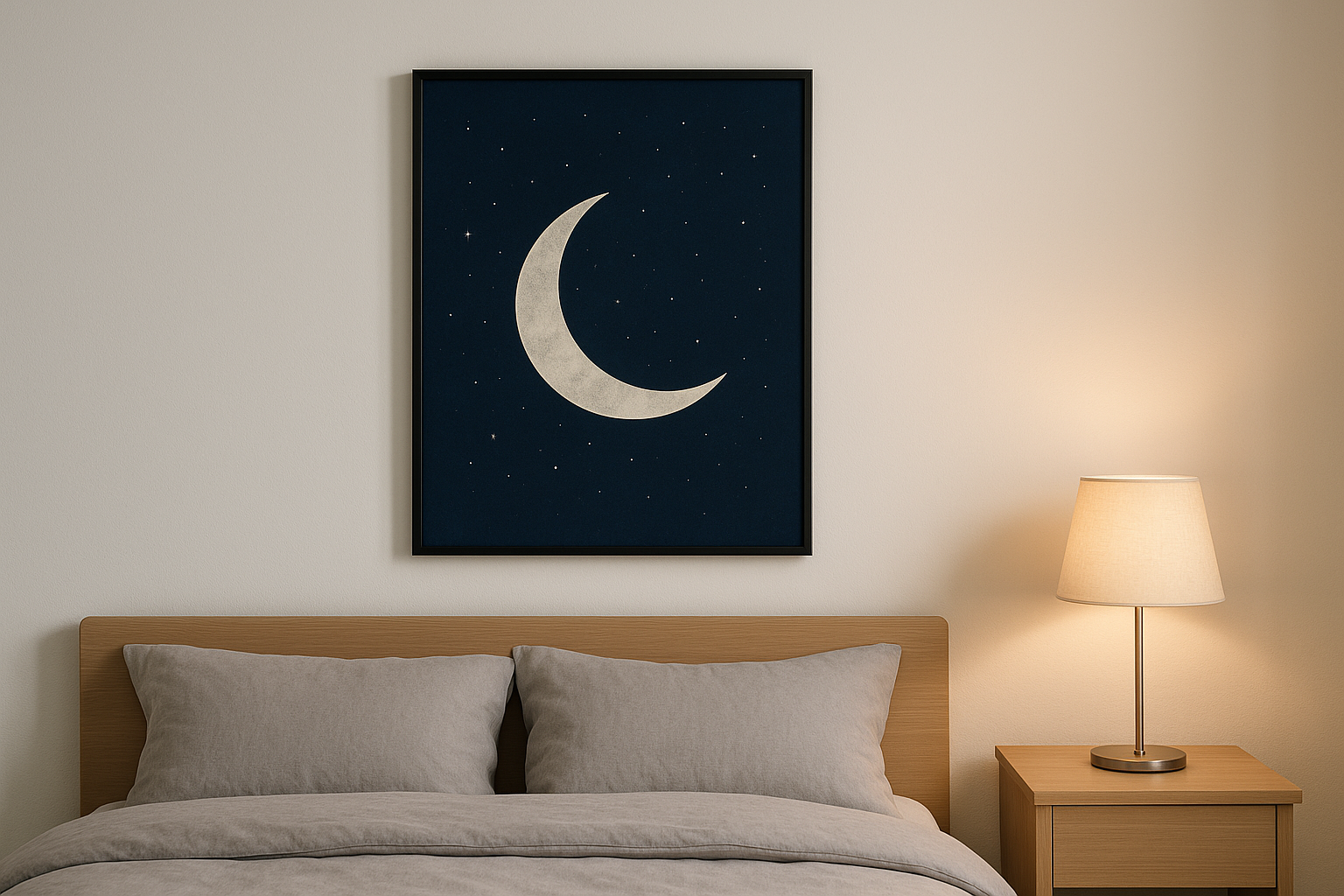
Night-sky art occupies a unique space among calming wall art for bedroom options because the subject matter already belongs to the room. Stars, moons, and quiet cosmic scenes carry a natural association with sleep and stillness, which makes them one of the most intuitive choices for a space designed around rest.
Why it calms a bedroom
Minimal celestial art works because it combines vast scale with total quiet. A lone moon against a deep indigo field or a single star cluster rendered in fine detail invites a kind of looking that asks nothing urgent of you. The subject matter signals nighttime at a deep level, which reinforces the room's function without requiring any deliberate effort on your part.
Art that mirrors the environment of sleep does some of the heaviest lifting in a bedroom.
How to pick colors and subject matter
Stay with deep blues, soft navy, and charcoal palettes rather than bright or multicolored galaxy prints. Good subject matter includes a single crescent moon, a minimal constellation map, or a soft abstract rendering of a night horizon. Avoid busy nebula prints with high-contrast neon tones, since those read as stimulating rather than restful.
Where to hang it and what size to choose
A 60x90 cm print above the bed creates a focused and grounded effect. Smaller 40x60 cm pieces work well on a side wall near a lamp, where the warm light reinforces the night-sky mood of the art.
Canvas vs acrylic glass and cost factors
Canvas gives celestial prints a soft, matte depth that suits the quiet tone of the imagery. Acrylic glass sharpens the contrast between dark backgrounds and fine star detail, making it the stronger choice for modern bedrooms with clean white walls.
8. Tone-on-tone monochrome and textured calm
Tone-on-tone art uses slight variations of a single color to build a composition that reads as unified and hushed. When you apply that principle to a bedroom wall, the result is one of the most understated forms of calming wall art for bedroom spaces available.
Why it calms a bedroom
The absence of strong color contrast removes one of the primary sources of visual tension in a room. Your eye moves across the piece slowly, finding interest in subtle shifts of value rather than competing hues. That gentle, low-effort engagement signals to your nervous system that nothing in the environment demands urgent attention.
When everything on the wall stays in the same tonal family, the room feels cohesive and still rather than visually busy.
How to pick colors and subject matter
Focus on pieces built around warm whites, soft grays, or muted taupes where the subject matter is either abstract texture or simplified natural forms. Linen-like surfaces, brushed plaster effects, and gentle geometric layering all work well. Avoid pieces where one element breaks sharply from the tonal range, since that single contrast point becomes the dominant focal point and disrupts the settled feeling.
Where to hang it and what size to choose
Tone-on-tone pieces work particularly well on walls with similar neutral paint tones, where the art blends into the environment without disappearing. A 60x90 cm format above the bed gives the texture enough surface area to read clearly from across the room.
Canvas vs acrylic glass and cost factors
Canvas is the natural pairing for this style because the material's own texture layers with the art's surface quality, deepening the tactile effect. Acrylic glass works if your bedroom leans toward a more polished, contemporary finish where the clean surface lets the tonal subtlety speak without interference.
Bringing it all together
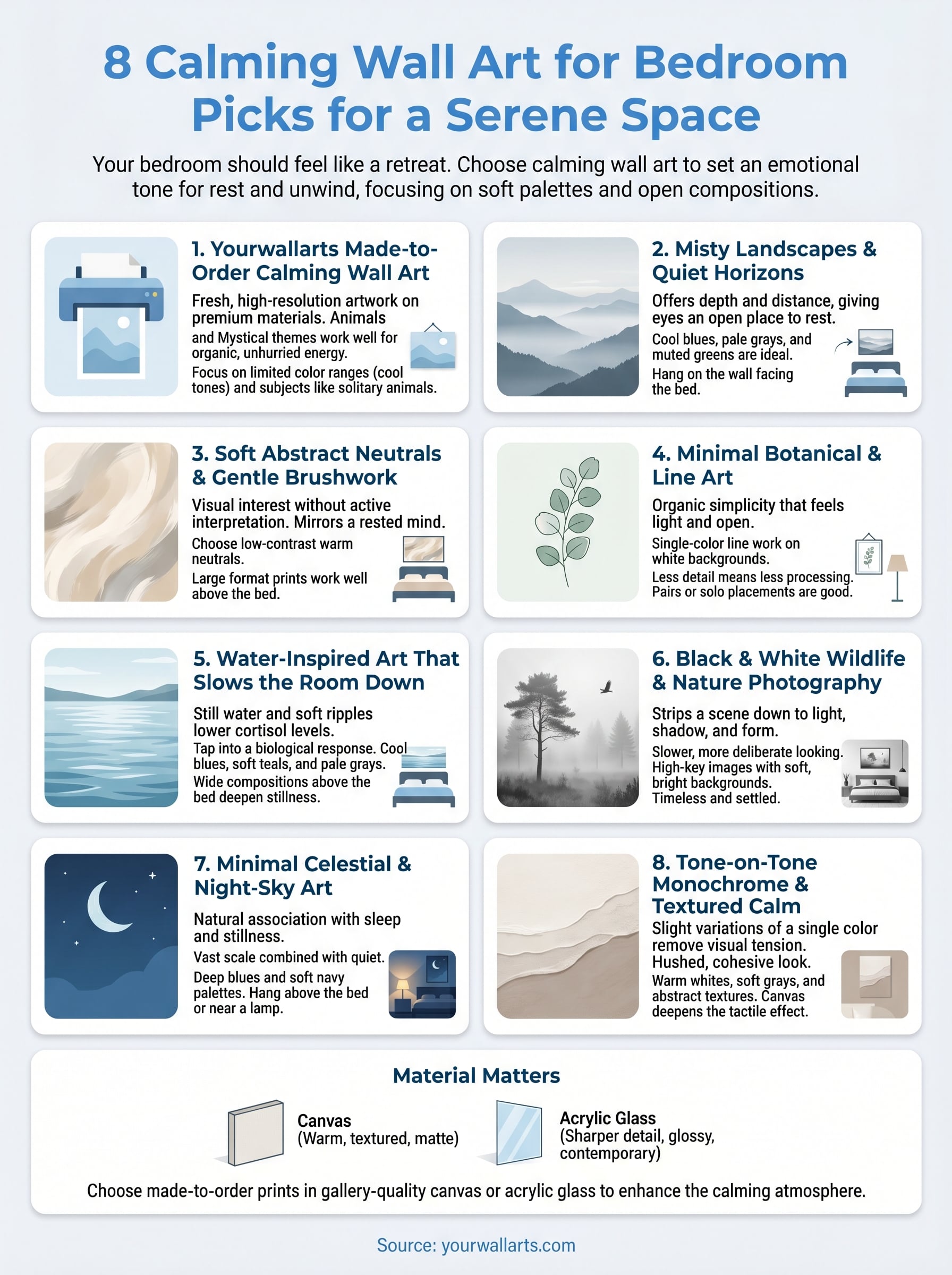
Every pick on this list works toward the same goal: a bedroom that feels genuinely restful rather than just decorated. The right calming wall art for bedroom spaces does quiet work, shaping how the room feels long after you've stopped consciously noticing it. Whether you lean toward misty landscapes, minimal line art, or tone-on-tone texture, the common thread is imagery that lowers visual tension rather than adding to it.
Your material choice matters just as much as the subject. Canvas softens a room; acrylic glass sharpens it. Size and placement determine whether a piece anchors the space or gets lost in it. Getting those three elements right, subject, material, and scale, turns a good print into one that genuinely changes how a room feels.
If you're ready to find a piece that fits your space, browse the full collection at Yourwallarts and order a made-to-order print that arrives ready to hang.