

12 Triptych Wall Art Ideas for Living Rooms (Canvas & Acrylic)
A single piece of art can anchor a room, but a three-panel set? That's how you make a wall feel intentional. Triptych wall art for living room spaces works because it creates visual rhythm, your eye moves across panels the way it follows a story, giving even a simple room a sense of depth and movement.
Choosing the right triptych comes down to a few key decisions: style, material, and scale. A dark, moody set printed on acrylic glass reads completely different from a nature scene stretched across canvas. And getting the sizing or spacing wrong can throw off an entire wall. These are the details that separate a room that looks "decorated" from one that looks considered.
That's exactly the kind of outcome we design for at Yourwallarts. Every piece we offer is made to order in canvas or acrylic glass, available in multiple sizes, and ships with everything you need to hang it right out of the box. Below, we've pulled together 12 triptych ideas that work specifically for living rooms, covering styles from Viking-inspired drama to serene nature scenes, with practical notes on placement and material pairing along the way.
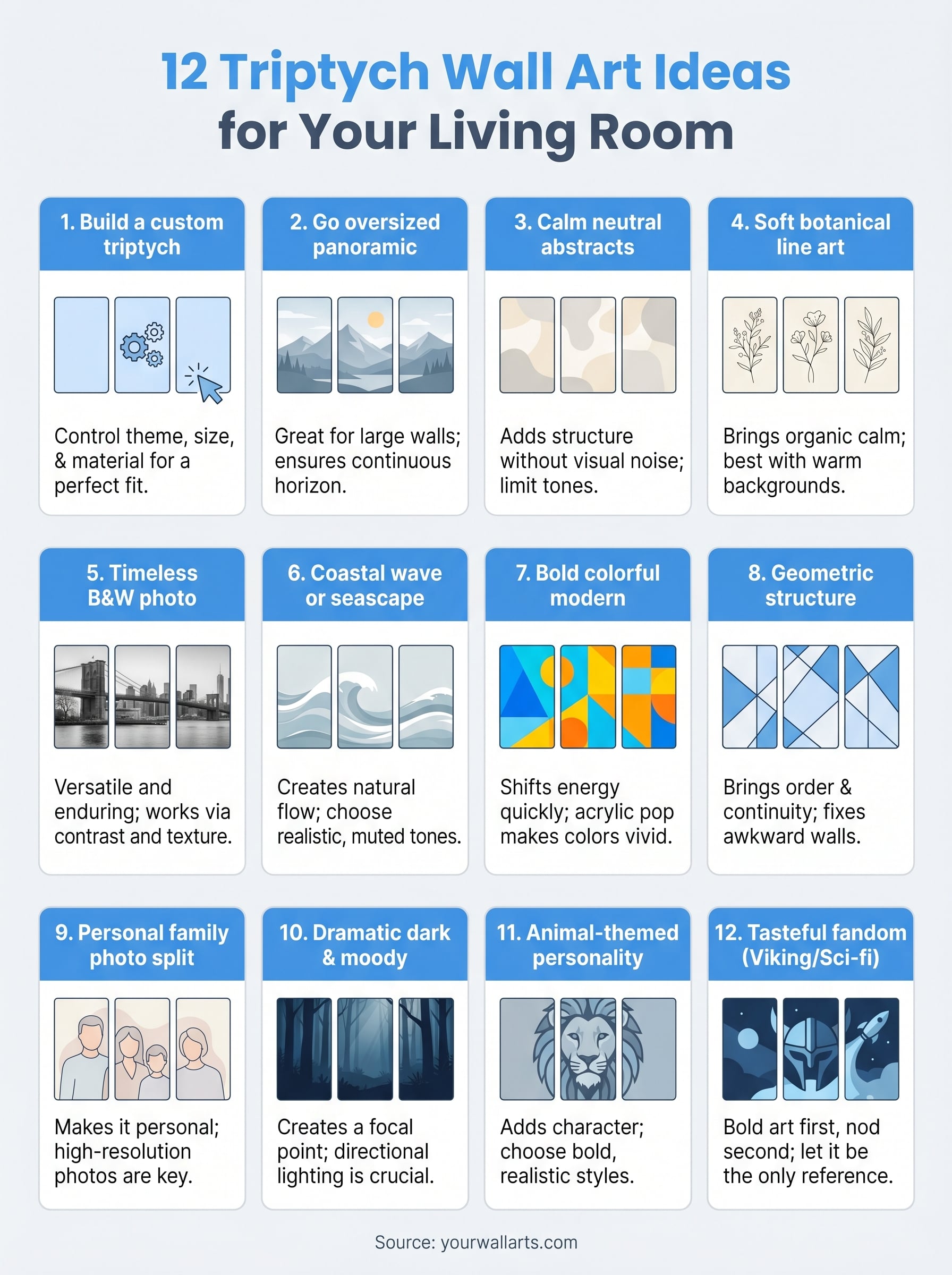
1. Build a custom triptych with Yourwallarts
At Yourwallarts, you control every decision: the theme, the material, and the size. This approach works well when you want triptych wall art for living room walls that fits your specific space and existing decor, rather than settling for whatever happens to be available as a pre-packaged set. Every piece is made to order, so nothing sits in a warehouse aging before it reaches your wall.
Best room and vibe for this idea
This option suits any living room style, from modern minimalist to warm and layered, because you choose both the image and the finish. It works especially well in open-plan spaces where the art needs to carry visual weight from across the room. If your walls are neutral, a custom set gives you the exact color story the room is missing without the guesswork.
How to pick the right image or theme
Start with what's already in the room. Your existing colors and furniture point you toward a clear direction: warm wood tones and earth colors pair naturally with nature, animal, or historical themes. If the space feels flat or forgettable, a high-contrast theme like dark and dramatic or sci-fi provides the visual anchor it needs.
Picking a theme you actually care about means you won't grow tired of looking at it within a year.
Use this quick guide to match themes to room styles:
- Modern or industrial room: geometric, sci-fi, or dark abstract
- Warm or rustic room: animals, nature, or historical scenes
- Eclectic or maximalist room: mystical, Viking, or colorful abstract
- Minimalist room: botanical line art or neutral abstract shapes
Canvas vs acrylic glass for this look
Canvas gives you a warm, textured feel that suits traditional or cozy living rooms. Acrylic glass delivers a sharp, glossy finish built for modern or contemporary spaces. If your living room gets a lot of natural light, acrylic will reflect it and make the colors read more vivid throughout the day.
Sizing and hanging guide for a three-panel set
For most living rooms, three 40x60 cm panels work for tighter walls, while 60x90 cm or 80x120 cm panels fit larger feature walls properly. Leave 5 to 7 cm of space between each panel and hang the center of the set at eye level, roughly 145 to 150 cm from the floor.
What to expect to pay
Pricing depends on your chosen material and panel size, with canvas starting at the lower end and acrylic glass sitting higher due to production requirements. Free shipping is included on every order, and the 30-day return guarantee means you order without risk.
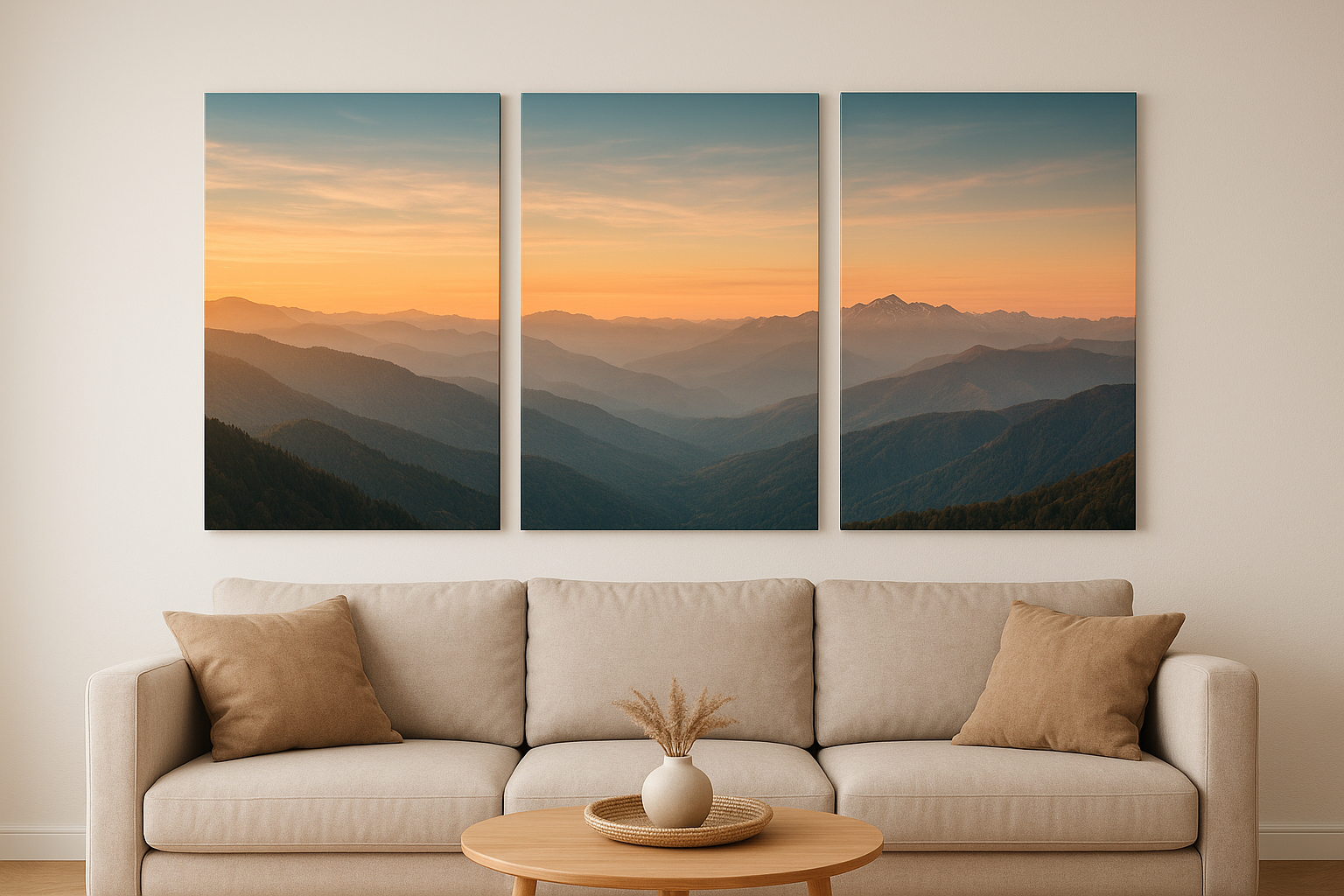
2. Go oversized with a panoramic landscape triptych
A panoramic landscape split across three panels is one of the most effective ways to use triptych wall art for living room feature walls. The format works because landscapes already have natural horizontal depth, making the split between panels feel intentional rather than arbitrary.
Best room and vibe for this idea
This idea fits best in large, open living rooms with wide walls and high ceilings. It reads particularly well in rooms with a natural or organic aesthetic, where the landscape reinforces the warmth of wood furniture, linen sofas, or earthy tones. Strong scene options include:
- Mountain ranges at dawn
- Dense forest canopies
- Open ocean horizons
How to choose a scene that splits well
Look for images with a continuous horizon line that flows across all three panels without a key focal point landing on a seam. Avoid scenes with a single central subject, like a lone tree dead-center, since the panel gap will cut directly through the main point of interest.
The best panoramic scenes distribute visual weight evenly across all three panels, not just in the middle.
Canvas vs acrylic glass for this look
Canvas suits warm, natural landscapes like forests or deserts, where the texture adds to the organic feel. Acrylic glass works better for dramatic scenes with vivid color, like sunset horizons or snowy peaks, where the glossy finish makes every tone pop.
Sizing and hanging guide for a three-panel set
Use 60x90 cm or 80x120 cm panels for this style, since smaller sizes undercut the panoramic effect. Keep gaps between 5 and 7 cm and hang the set so the horizon line sits at eye level.
What to expect to pay
Pricing scales with panel size and material, with canvas being the more budget-friendly option. Free shipping is included on every order from Yourwallarts.
3. Create a calm focal point with neutral abstract shapes
Neutral abstract shapes give you visual interest without visual noise. This style of triptych wall art for living room walls adds structure and movement without competing with your furniture, and each panel holds its own weight while the three together read as one composed piece.
Best room and vibe for this idea
This style fits best in modern, Scandinavian, or minimalist living rooms where the color palette is already muted. It works well in rooms that feel clean but slightly cold, since abstract shapes add character without clutter. Strong room pairings include:
- Spaces with white or off-white walls
- Rooms with natural wood or concrete accents
- Open-plan areas that need a soft visual anchor
Color palette tips that keep it feeling expensive
Stick to two or three tones at most, such as warm cream, taupe, charcoal, or dusty sage. Avoid mixing too many neutrals with competing undertones, since that makes the set look accidental rather than curated.
Warm-toned neutrals like sand and terracotta read richer than cool grays in typical living room lighting.
Adding one slightly darker accent tone within the shapes creates just enough contrast to hold attention without breaking the calm.
Canvas vs acrylic glass for this look
Canvas suits soft, organic abstract shapes with a brushstroke quality, while acrylic glass works better when the shapes are clean and geometric, since the glossy surface sharpens every edge and makes the contrast feel more deliberate.
Sizing and hanging guide for a three-panel set
Use three 40x60 cm panels for smaller walls or 60x90 cm panels for wider feature walls. Keep gaps between 5 and 7 cm and hang the center of the set at eye level.
What to expect to pay
Pricing scales with panel size and material choice. Canvas is the more budget-friendly option, and free shipping is included on every Yourwallarts order.
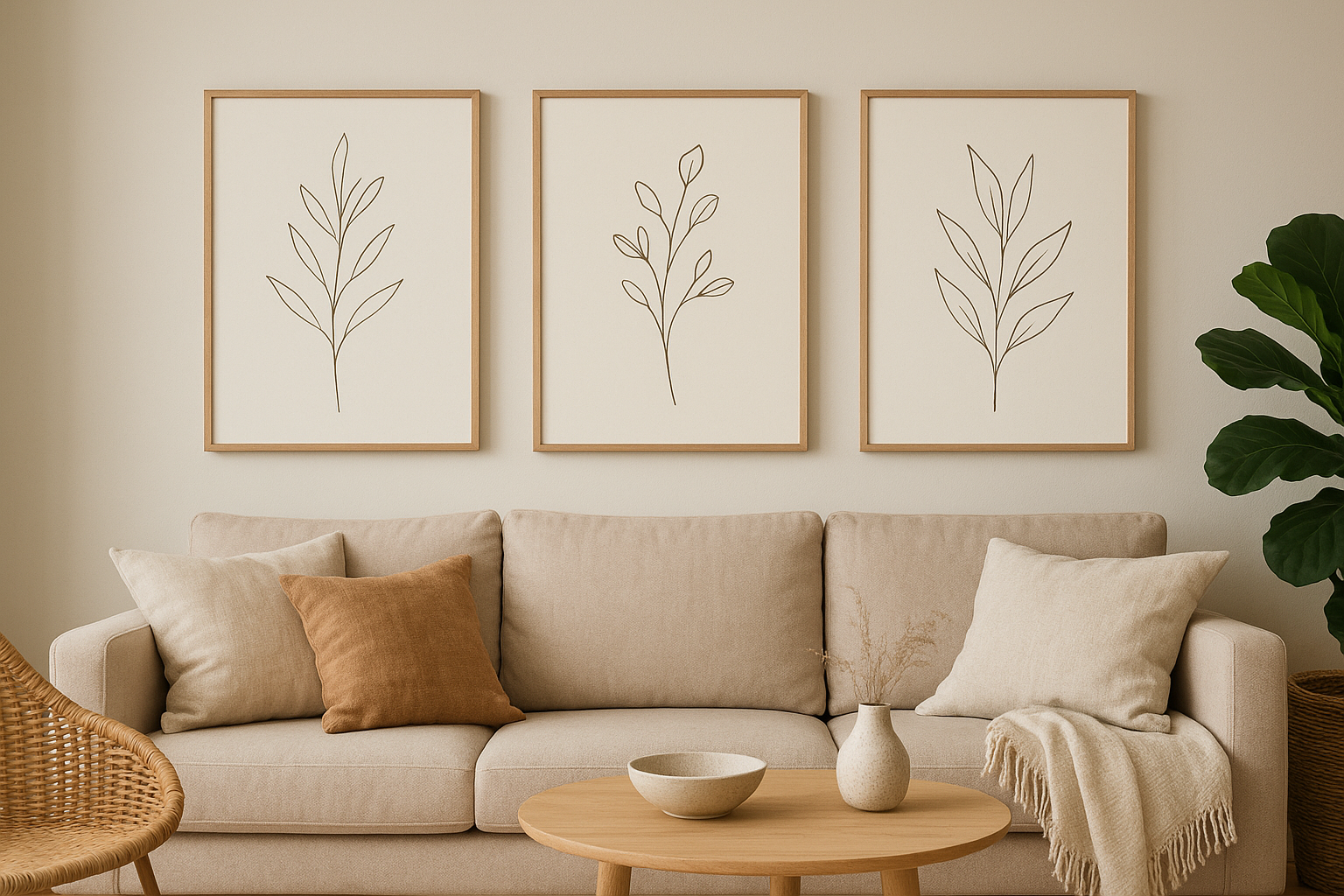
4. Add softness with minimalist botanical line art
Minimalist botanical line art brings organic calm to a living room without asking for too much attention. As a style of triptych wall art for living room walls, it works because the thin, hand-drawn quality of each plant or stem creates gentle visual variety while the muted tones keep the overall mood quiet and composed.
Best room and vibe for this idea
This style fits best in soft, layered living rooms with natural textures like linen, rattan, or raw wood. It suits rooms that already feel warm and relaxed, adding a botanical presence without the weight of a full landscape or a busy pattern. Three separate stems or botanical studies, one per panel, create a collected look without needing to match exactly.
Frame and background choices that avoid "clinical"
A white background on botanical line art can read cold if the rest of your room has warm undertones. Opt instead for an off-white, cream, or soft sage background to keep each panel from feeling sterile. The line weight matters too: thicker, slightly imperfect strokes look more natural than razor-thin digital lines.
Botanical art with visible texture or slightly organic line variation reads as intentional rather than mass-produced.
Canvas vs acrylic glass for this look
Canvas is the stronger choice here because the fabric texture reinforces the hand-drawn, organic quality of botanical illustration. Acrylic glass sharpens edges in a way that can make the artwork feel overly precise and remove the warmth the style depends on.
Sizing and hanging guide for a three-panel set
Three 40x60 cm panels work well in compact rooms, while 60x90 cm panels suit taller walls. Keep gaps between 5 and 7 cm for a cohesive look.
What to expect to pay
Pricing scales with panel size and material, and free shipping is included on every Yourwallarts order.
5. Bring in texture with a black and white photo triptych
Black and white photography translated into a three-panel set is one of the most versatile and enduring approaches to triptych wall art for living room spaces. The absence of color removes the challenge of palette matching entirely, so the art works alongside almost any existing room scheme without conflict.
Best room and vibe for this idea
This style fits naturally in modern, industrial, and transitional living rooms where clean lines and contrast are already part of the design language. It also works in warmer, more traditional spaces as a counterbalance, where the monochrome keeps the room from feeling too busy or decorative.
Photo subject ideas that feel timeless in a living room
Architecture, cityscapes, and natural forms tend to hold up the longest as art choices because they carry emotional weight without being too personal or specific. Strong subject options include:
- Narrow city streets or bridges captured in mist or rain
- Abstract close-ups of sand dunes, rock formations, or water
- Structural subjects like staircases, arches, or empty corridors
The strongest black and white photo triptychs work with contrast and texture rather than just converting a colorful image to grayscale.
Canvas vs acrylic glass for this look
Canvas adds grain and warmth that suits moody or atmospheric photography particularly well. Acrylic glass sharpens every detail and makes high-contrast scenes with deep blacks look striking, especially in rooms with directional lighting.
Sizing and hanging guide for a three-panel set
Use 60x90 cm panels as a starting point for standard living room walls. Keep gaps between 5 and 7 cm, and center the set at eye level across the wall.
What to expect to pay
Pricing scales with panel size and chosen material, and free shipping is included on every order from Yourwallarts.
6. Lean coastal with a wave or seascape triptych
A coastal seascape across three panels brings natural movement and calm into a living room without requiring you to live anywhere near water. This style of triptych wall art for living room walls works because the ocean gives you continuous visual flow, with waves, light, and horizon lines that shift naturally from one panel to the next.
Best room and vibe for this idea
Coastal triptychs suit light, airy living rooms with neutral walls and furniture that leans toward natural textures, think linen sofas, whitewashed wood, or woven accents. The format works especially well in rooms that receive good natural light, since the blues and greens of a seascape scene look richer and more dimensional as light changes throughout the day.
How to keep coastal from looking themed or kitschy
The difference between a coastal living room and a beach souvenir shop comes down to restraint and tone. Choose seascape art with muted, realistic tones rather than oversaturated turquoise and cartoon-bright waves. An overcast seascape, a rocky shoreline at low tide, or a wide ocean horizon at dusk reads as sophisticated rather than decorative.
Limiting coastal references to one strong focal point, like the triptych itself, keeps the room from tipping into theme territory.
Canvas vs acrylic glass for this look
Canvas suits moody, atmospheric seascapes where soft texture adds to the organic, natural quality of the scene. Acrylic glass works better for crisp, high-contrast ocean photography with vivid water tones, since the glossy surface makes blues and greens visually sharp.
Sizing and hanging guide for a three-panel set
Use 60x90 cm or 80x120 cm panels to give the seascape enough room to breathe. Keep gaps between 5 and 7 cm and center the set at eye level across the wall.
What to expect to pay
Pricing scales with panel size and material, and free shipping is included on every Yourwallarts order.
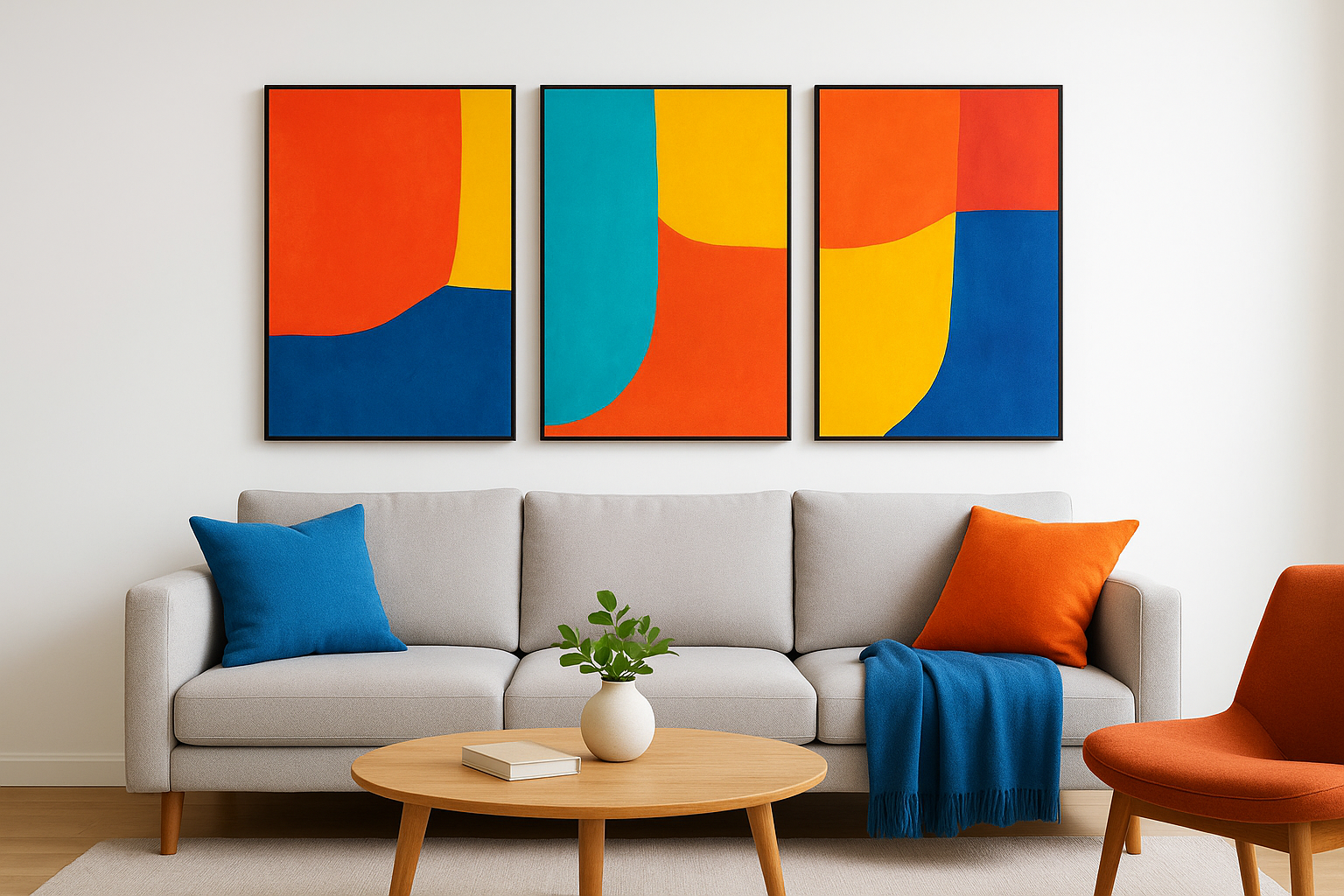
7. Go bold with a colorful modern triptych
A colorful modern triptych is the fastest way to shift a room's energy without replacing any furniture. This approach to triptych wall art for living room spaces works because bold color distributed across three panels creates a statement that a single framed print simply cannot match at the same scale.
Best room and vibe for this idea
Colorful modern art suits neutral or monochrome living rooms that need a focal point rather than more pattern. It works best in rooms with clean-lined furniture and minimal surface clutter, where the color in the artwork gets the full stage rather than competing with busy surroundings.
How to match color to rugs, pillows, and accent chairs
Pull at least one color from the artwork and repeat it in one or two soft furnishings, such as a throw pillow or accent chair. This connects the art to the room without making the scheme feel forced. Avoid matching every color exactly, since a little tension between the art and the room keeps the space from reading flat.
One well-placed color echo between your triptych and a room accessory does more than a fully matched color scheme.
Canvas vs acrylic glass for this look
Acrylic glass is the stronger choice here because the glossy surface makes saturated colors more vibrant and precise. Canvas works if the color palette leans toward warm, painterly tones where the matte texture adds to the artistic quality of the piece.
Sizing and hanging guide for a three-panel set
Use 60x90 cm or 80x120 cm panels to give bold color enough visual presence. Keep gaps between 5 and 7 cm and hang the set centered at eye level.
What to expect to pay
Pricing scales with panel size and material choice, and free shipping is included on every Yourwallarts order.
8. Add structure with a geometric triptych
Geometric art brings order and precision to a living room without feeling cold or empty. As a form of triptych wall art for living room spaces, geometric patterns work across all three panels because repeated shapes and angles create natural visual continuity, giving the eye a clear path from left to right without needing a single focal point.
Best room and vibe for this idea
Geometric triptychs suit modern, contemporary, and mid-century living rooms where clean lines are already part of the design. The style works particularly well in spaces with structured furniture, like low-profile sofas or boxy armchairs, since the geometry in the art reinforces the room's existing architecture.
How to use geometry to fix an "awkward wall"
Narrow walls, oddly proportioned spaces, and rooms with low ceilings or uneven layouts all benefit from geometric art. Repeating shapes draw the eye horizontally, which makes a narrow wall feel wider, while vertical geometric elements add height to a room that feels compressed.
Three vertically oriented geometric panels hung with tight spacing can add perceived height to a low-ceilinged room more effectively than a single large piece.
Canvas vs acrylic glass for this look
Acrylic glass is the better choice for geometric art because the glossy, sharp surface makes every angle and line read with maximum clarity. Canvas works if you want a softer, more painterly interpretation of geometric shapes, where texture slightly blurrs the hard edges.
Sizing and hanging guide for a three-panel set
Use 60x90 cm panels for standard walls and 80x120 cm panels for larger feature walls. Keep gaps between 5 and 7 cm and hang centered at eye level.
What to expect to pay
Pricing scales with panel size and material, and free shipping is included on every Yourwallarts order.
9. Make it personal with a three-panel family photo split
A family photo triptych turns your own images into large-scale art that no catalog can replicate. This approach to triptych wall art for living room walls works because it shifts the space from decorated to genuinely personal, giving guests something meaningful to look at rather than something generic.
Best room and vibe for this idea
This idea works best in warm, inviting living rooms where the goal is connection over style performance. It suits rooms with soft lighting, comfortable furniture, and a color palette built around natural tones. A family photo split reads most naturally above a sofa or along a hallway-facing wall where visitors encounter it early.
Photo prep tips so it looks sharp at large sizes
Low-resolution phone photos from several years ago will look blurry when stretched across panels at 60x90 cm or larger. Use the highest resolution image available, ideally one taken in good natural light with minimal compression. Portrait-orientation shots typically split better across three vertical panels than wide landscape shots, since the subject stays visible in each panel without key faces landing on a seam.
Cropping your original image into thirds before ordering lets you preview exactly how each panel will look before you commit.
Canvas vs acrylic glass for this look
Canvas is the more forgiving choice for personal photography because the matte texture softens minor imperfections in the original image. Acrylic glass reveals every detail sharply, which rewards high-quality, well-lit source photos but can highlight grain or blur in older images.
Sizing and hanging guide for a three-panel set
Use three 40x60 cm panels for smaller walls or 60x90 cm panels for wider feature walls. Keep gaps between 5 and 7 cm and hang the set centered at eye level.
What to expect to pay
Pricing scales with panel size and chosen material, and free shipping is included on every Yourwallarts order.
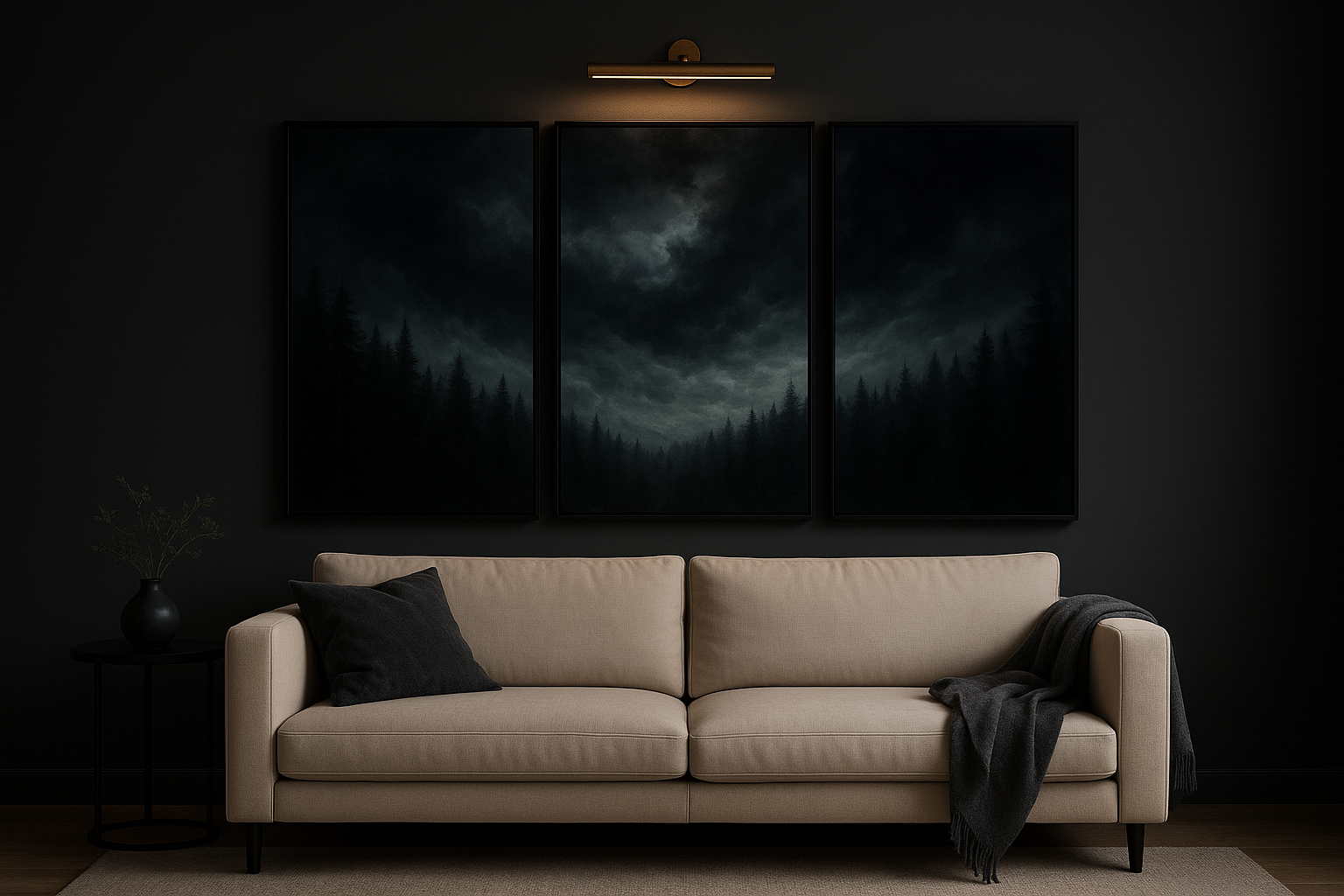
10. Create drama with dark and moody triptych art
Dark and moody art works as triptych wall art for living room spaces because depth and contrast across three panels create a focal point that commands attention the moment someone walks into the room. This style suits decorators who want art that feels immersive rather than simply decorative.
Best room and vibe for this idea
Dark triptychs work best in rooms with strong contrasting elements, like a light sofa against a dark accent wall, where the art reinforces existing tension in the scheme. Think deep forest scenes, stormy skies, shadowed architecture, or abstract dark compositions that carry real emotional weight across all three panels.
Lighting tips that make dark art look intentional
Directional lighting is the single most important factor with dark art, because overhead ambient light flattens the tones and strips the piece of its impact. Position a picture light mounted above the set or adjustable spotlights angled at the panels to pull out depth in the darker tones.
Warm-toned bulbs around 2700K bring out richness in deep blues, greens, and blacks without washing out contrast.
Canvas vs acrylic glass for this look
Canvas suits dark organic subjects like forests or dramatic skies, where the matte surface deepens shadow tones naturally. Acrylic glass works well for high-contrast dark scenes where sharp detail and vivid midtones carry the composition across each panel.
Sizing and hanging guide for a three-panel set
Use 60x90 cm or 80x120 cm panels so the moody tones have enough surface area to build real atmosphere on your wall. Keep gaps between 5 and 7 cm and center the set at eye level.
What to expect to pay
Pricing scales with your chosen panel size and material, and free shipping is included on every Yourwallarts order.
11. Bring in personality with animal-themed triptychs
Animal-themed art is one of the most flexible categories of triptych wall art for living room walls because the subject range is broad enough to suit nearly any room style. From macro close-ups of a wolf's face to illustrated birds perched across three vertical panels, animal triptychs add life and character without requiring you to commit to a specific design movement.
Best room and vibe for this idea
Animal triptychs work best in warm, nature-forward living rooms with organic materials like wood, leather, and stone already in the mix. They also suit transitional spaces that sit between casual and polished, where the art needs personality but not chaos. A single, well-chosen animal subject spanning all three panels anchors the room without overwhelming it.
How to choose animals and styles that still feel grown-up
The style of the artwork matters more than the animal itself. Realistic, high-contrast photography of large animals like lions, eagles, or horses reads as sophisticated, while overly cute or cartoon-adjacent illustrations tip toward novelty. Stick with bold, confident compositions that treat the subject with the same seriousness as fine art photography.
A close-up crop that fills each panel with texture, fur, feathers, or scale detail gives animal art a sense of scale that commands respect.
Canvas vs acrylic glass for this look
Canvas suits wildlife and nature-inspired animal art where the matte texture adds an organic, editorial quality. Acrylic glass works better for high-contrast animal portraits with strong shadow and highlight detail, where the glossy finish sharpens every strand of texture.
Sizing and hanging guide for a three-panel set
Use 60x90 cm panels as a baseline for standard walls, with 80x120 cm panels for large feature walls. Keep gaps between 5 and 7 cm and center the set at eye level.
What to expect to pay
Pricing scales with panel size and material, and free shipping is included on every Yourwallarts order.
12. Lean into fandom tastefully with Vikings or sci-fi themes
Vikings and sci-fi are two of the most popular fandom themes for triptych wall art for living room spaces, and both work well when the execution leads with visual quality rather than obvious references. The goal is artwork that reads as bold, dramatic art first and as a nod to your interests second.
Best room and vibe for this idea
This style suits dark, dramatic living rooms with strong contrasting elements, like charcoal or deep navy walls paired with metal or industrial accents. Viking themes work naturally in rooms with leather furniture, exposed wood, and warm lighting, while sci-fi art fits cleaner contemporary spaces with cooler tones and structured lines.
How to keep niche art from taking over the room
Let the triptych be the single fandom reference in your room. If the art is the statement, everything else in the space should stay neutral and restrained.
One strong thematic triptych reads as a design choice. Multiple fandom references across the same room read as a collection.
Keep furniture and accessories free of logos or obvious theme markers so the art commands attention on its own terms rather than competing with other references around it.
Canvas vs acrylic glass for this look
Canvas suits Viking-themed art with its organic textures, battle scenes, and earthy tones, where the matte surface deepens the atmospheric quality. Acrylic glass works better for sci-fi compositions with vivid neon tones or sharp metallic detail, since the glossy surface amplifies contrast and precision across each panel.
Sizing and hanging guide for a three-panel set
Use 60x90 cm or 80x120 cm panels for feature walls. Keep gaps between 5 and 7 cm and center the set at eye level so the composition reads as one unified piece.
What to expect to pay
Pricing scales with panel size and material, and free shipping is included on every Yourwallarts order.
Final thoughts
Choosing triptych wall art for living room walls is less about finding the "right" style and more about matching the art to what your specific space actually needs. If the room feels flat, bold color or high-contrast photography fixes that. If it feels busy, neutral abstracts or botanical line art brings it back down. Material matters just as much as subject, so use canvas when you want warmth and texture, and acrylic glass when you want precision and visual punch.
Every idea in this list is achievable without a designer or a large budget. The key decisions are scale, spacing, and theme alignment with what you already have in the room. Get those three things right and the result looks intentional rather than assembled.
When you're ready to order, browse the full collection at Yourwallarts to find the theme and finish that fits your wall.