

5 Animal Wall Art for Living Room Ideas (Canvas & Acrylic)
A well-chosen piece of animal wall art for living room spaces does something most decor can't, it brings energy, personality, and a sense of nature into your home without overwhelming the room. Whether you're drawn to the quiet grace of a deer portrait or the raw intensity of a lion close-up, animal-themed prints create focal points that guests actually notice and remember.
The challenge? Finding art that looks as good on your wall as it does on a screen. At Yourwallarts, we produce every piece on premium canvas or acrylic glass, made to order and shipped with everything you need to hang it. No flimsy posters, no guesswork, just gallery-quality prints ready to go up the day they arrive.
Below, we've put together five animal wall art ideas that work specifically in living rooms. Each one pairs a different subject and style with practical tips on sizing, placement, and material choice so you can pick the right fit for your space. Let's get into it.
1. Yourwallarts Oversized Statement Animal Print
An oversized print is the fastest way to transform a blank wall into a real conversation piece. Single large-format animal wall art for living room spaces creates instant visual weight, anchoring the room and giving your eye somewhere to land without piling on extra decor.
Best animal subjects for a living room focal point
Bold, expressive subjects work best at large scale. Lions, wolves, eagles, and bears carry enough detail and intensity to hold attention across a room. Portraits with strong eye contact from the animal tend to draw people in and keep them engaged far longer than wide, distant landscape compositions do.
Size and placement that look intentional, not cramped
At Yourwallarts, the 80x120 cm format gives you true statement-piece scale. Hang it so the center sits at roughly eye level (57 to 60 inches from the floor), and leave at least 6 to 8 inches of breathing room on each side of the frame.
A print that's too small for its wall reads as an afterthought, while one that fills the space confidently looks like it was always meant to be there.
Canvas vs acrylic glass and how each changes the feel
Canvas delivers a warm, textured surface that suits rooms with wood furniture, soft lighting, or earthy tones well. Acrylic glass produces a sharp, glossy finish that reads more contemporary and makes colors appear more vivid and saturated, especially useful for dark, dramatic animal subjects.
Styling tips for color matching, rugs, and furniture
Pull one or two secondary colors from the print and repeat them in throw pillows, a rug, or a blanket to connect the art to the rest of the room. Keep surrounding walls neutral so the print stays the clear visual focus rather than competing with other patterns or colors nearby.
What to expect for turnaround, shipping, and returns
Yourwallarts processes every order within 1 to 2 business days and covers delivery with free shipping on all orders. If the print doesn't fit your space, a 30-day return guarantee means you can send it back without any added hassle.
2. Black and White Wildlife Photography
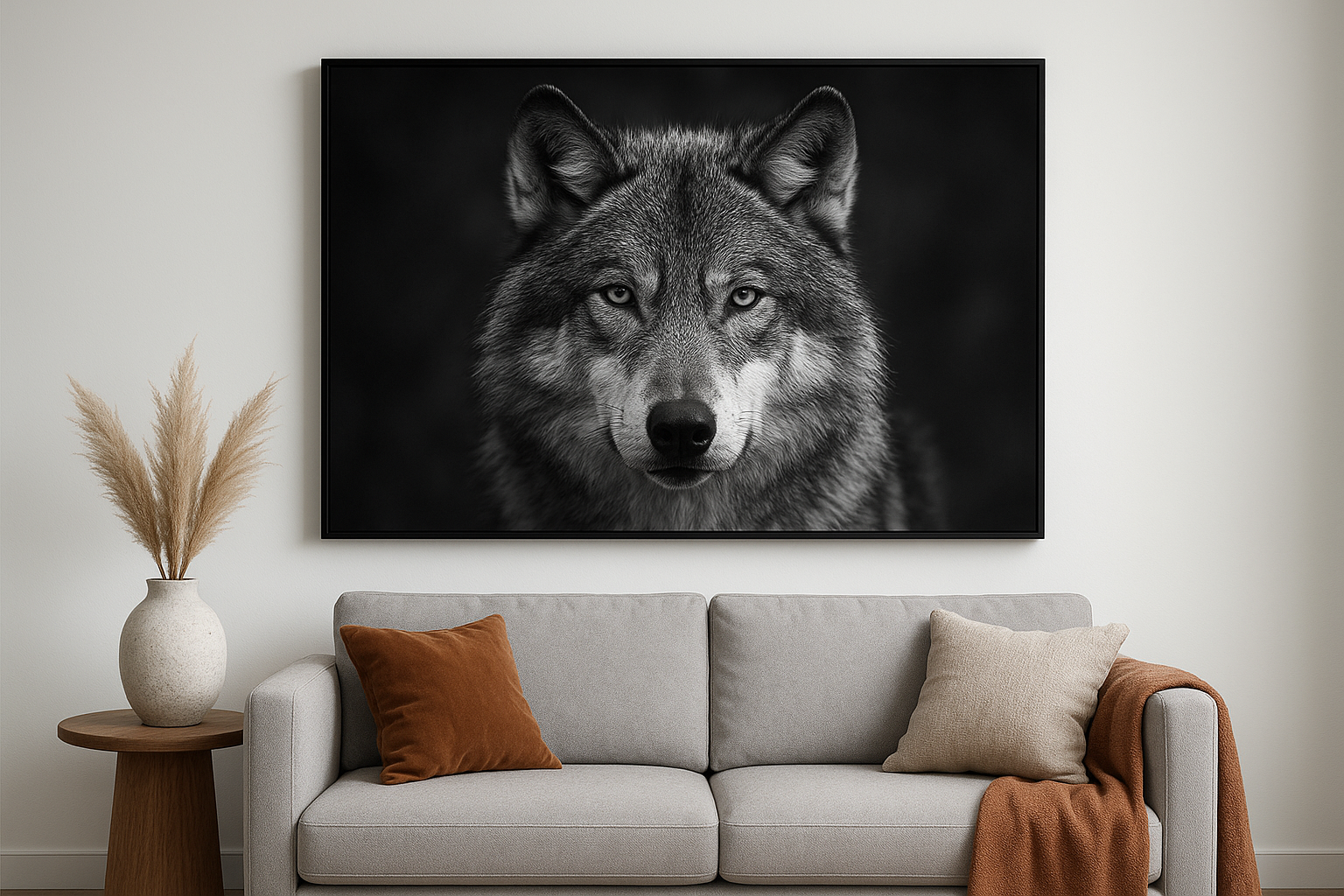
Black and white wildlife photography strips away color and lets form, texture, and expression do all the work. As animal wall art for living room settings, monochrome prints carry a quiet authority that color art rarely matches.
Why monochrome animal art works in modern spaces
Without color competing for attention, detail and emotion do the heavy lifting. A close-up of a wolf or elephant in black and white reads as artistic and refined rather than decorative, which suits contemporary interiors well.
Best rooms and color palettes for black and white prints
Monochrome art fits naturally in rooms with neutral palettes like white, gray, and beige. It also pairs cleanly with charcoal or navy accent walls where bolder color art might clash.
Black and white prints give you flexibility that almost no other style offers, because they work across nearly every color scheme.
How to pick contrast, detail level, and composition
Choose prints with strong tonal contrast rather than flat gray tones. Tight compositions focused on the animal's face create more impact than wide-angle shots at large scale. Look for these qualities when browsing:
- High contrast between shadows and highlights
- Sharp focus on the animal's eyes or defining features
- Minimal, uncluttered backgrounds
Canvas vs acrylic glass for sharpness and glare control
Acrylic glass sharpens fine detail and makes blacks look deeper. Canvas softens edges slightly, which suits grainy or textured photography better and reduces unwanted glare in sun-heavy rooms.
Easy styling moves that keep it from feeling cold
Add warm-toned accessories nearby, like a wooden side table or a rust-colored throw, to offset the coolness of the print. Natural materials such as jute or linen do the same without adding visual noise.
3. Colorful Pop Art Animals
Pop art animal prints bring vibrant color and graphic energy to a living room without requiring you to commit to a full decorative overhaul. Used correctly, this style of animal wall art for living room spaces reads as confident and intentional rather than overdone.
When Bold Animal Art Looks Elevated Instead of Loud
The difference between bold and busy usually comes down to clean lines and limited color palettes. Pop art prints that use three to five strong colors with a clear subject and simple background stay visually sharp and easy to live with long-term.
Restraint in the design itself is what gives bold color room to breathe.
How to Choose a Color Scheme That Ties Into the Room
Pick a print where at least one dominant color already appears in your existing furniture or textiles. This one connection stops the art from feeling random and makes the whole room look considered.
Best Print Sizes for Small vs Large Living Rooms
In smaller rooms, a 40x60 cm print works well as part of a grouped arrangement. Larger living rooms benefit from the 80x120 cm format, which gives the color enough surface area to register from across the room.
Canvas vs Acrylic Glass for Saturation and Depth
Acrylic glass intensifies color saturation and gives pop art prints a sharp, almost backlit quality. Canvas softens tones slightly, which suits warmer, more muted pop art palettes better than high-contrast neon compositions.
Pairing Tips With Gallery Walls, Shelves, and Plants
Place a pop art print as the anchor piece on a gallery wall and surround it with simpler, neutral artwork to avoid visual competition. Leafy plants nearby echo the organic subject matter and keep the bold colors from feeling flat.
4. Coastal and Safari Animal Sets
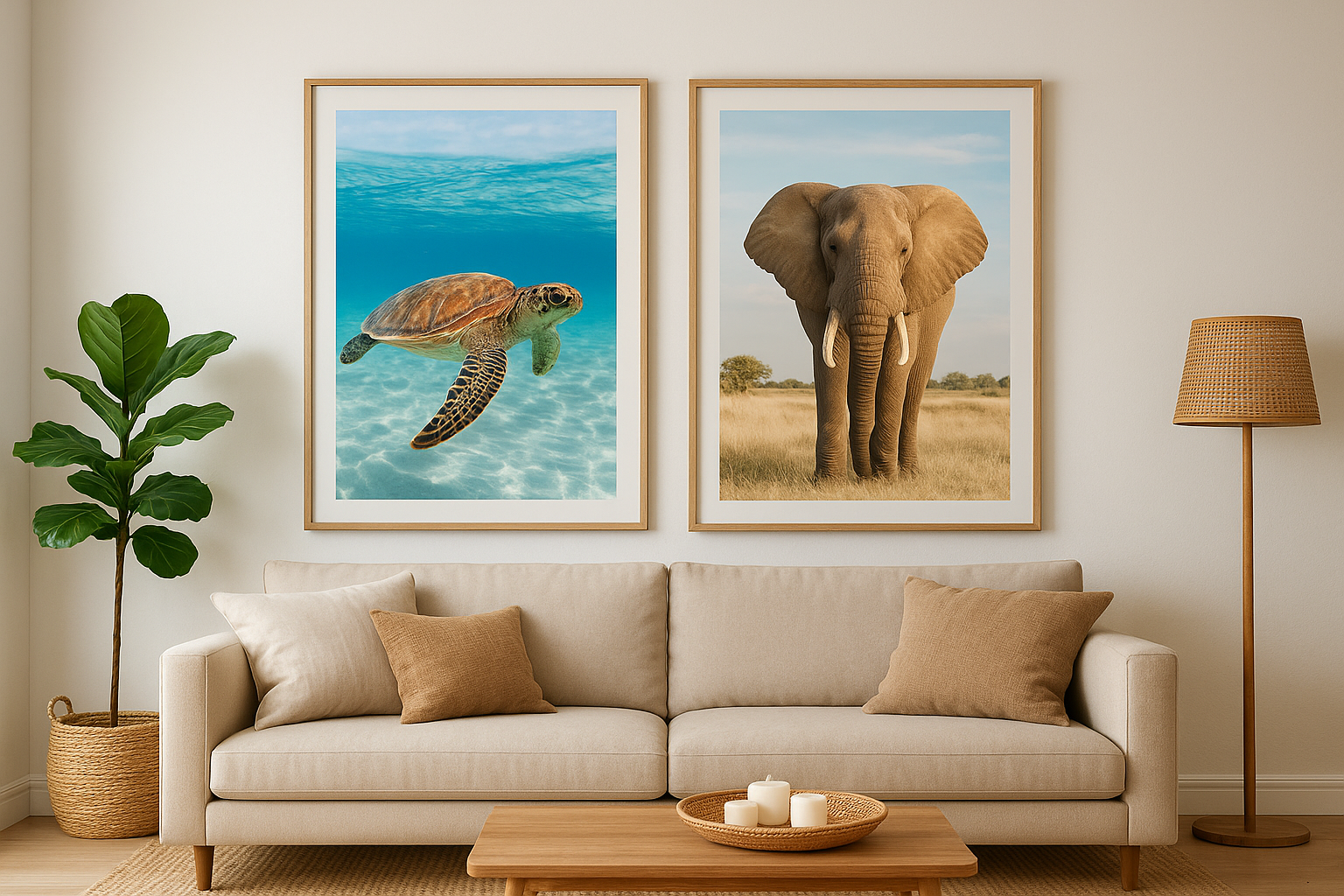
Multi-piece animal sets give you a way to build cohesive animal wall art for living room walls without relying on a single dominant piece. Diptychs and triptychs spread visual interest across a wider surface and work especially well in open living rooms where one print would get lost.
How Diptychs and Triptychs Create Balance Over a Sofa
A two or three-piece set fills horizontal wall space proportionally when hung above a sofa. Keep the total combined width within 75% of your sofa's length so the arrangement looks grounded rather than floating above it.
Animals and Scenes That Read Calm, Not Childish
Choose realistic wildlife photography or illustrated naturalist styles over simplified cartoon depictions. Subjects like sea turtles, elephants, or zebras in natural settings carry quiet visual weight that holds up well in adult living rooms long-term.
Realistic and detailed always reads more sophisticated than oversimplified, regardless of the animal subject.
Spacing Rules So Multi-Piece Art Looks Aligned
Hang pieces 2 to 3 inches apart and use a level to keep the top edges consistent. Even spacing is what separates an intentional set from prints that look randomly placed.
Canvas vs Acrylic Glass for Bright Rooms and Sunlight
In sun-heavy rooms, canvas diffuses glare naturally without washing out the image. Acrylic glass performs better in shaded spaces where its reflective surface won't catch direct light throughout the day.
Coordinating With Neutrals, Wood Tones, and Woven Textures
Pair coastal or safari sets with linen cushions, rattan accents, or a jute rug to reinforce the natural theme throughout your room. Warm wood tones in nearby furniture pull the earthy colors from the prints into the rest of your space seamlessly.
5. Vintage and Illustrated Animal Gallery Wall
A gallery wall built around vintage and illustrated animal wall art for living room spaces lets you mix subjects and styles without committing to a single large piece. Done well, it adds layered personality to a wall that a single print simply cannot replicate.
How to Mix Animals, Styles, and Eras Without Chaos
Stick to a consistent color palette across all your prints to create visual harmony. When subject matter varies, shared tones are what keep the wall readable rather than chaotic.
A unified color story across different prints is the single most effective way to make a mixed gallery wall feel intentional.
A Simple Layout Plan for Consistent Spacing and Alignment
Lay your prints on the floor first to test the arrangement before committing to wall holes. Keep 2 to 3 inches of consistent spacing between each piece so the grid reads as deliberate rather than accidental.
How to Balance Small Prints With One Anchor Piece
Place your largest print slightly off-center within the arrangement and build smaller pieces around it. This creates clear visual hierarchy without making the wall feel rigid or overly symmetrical.
Canvas vs Acrylic Glass When You Mix Multiple Finishes
Mixing canvas and acrylic glass pieces on the same wall works when you treat each finish as intentional. Acrylic pieces pull the eye first, so position them as accent points rather than background filler.
Keeping the Wall Cohesive With Mats, Frames, and Color
Matching frame colors across all pieces, whether black, natural wood, or white, ties the arrangement together immediately. Adding cream or white mats to smaller prints brings them visually up to the scale of larger pieces nearby.
Quick Wrap-Up
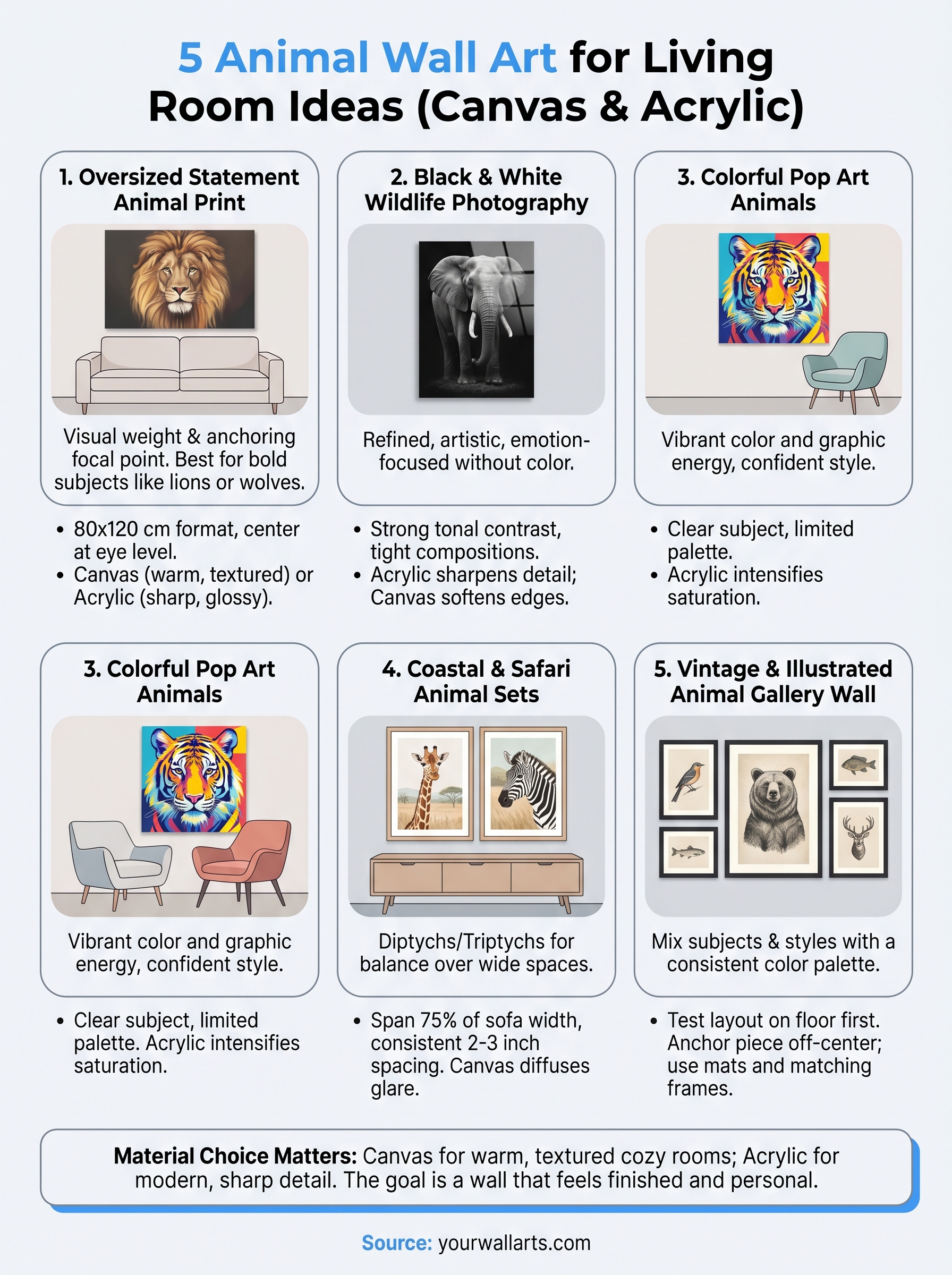
Each of these five ideas gives you a different way to bring animal wall art for living room walls to life, from a single oversized canvas to a layered vintage gallery wall. The right choice depends on your existing furniture, your room's natural light, and how bold you want to go with your focal point.
Material selection matters more than most people expect. Canvas works best in warm, cozy rooms with natural textures and soft lighting, while acrylic glass suits modern, minimal spaces where sharp detail and vivid color intensity make a noticeably bigger impact. Both finishes ship ready to hang, so there's no extra setup involved once your order arrives.
Whatever style you land on, the goal stays the same: a wall that feels finished and genuinely personal. Browse the full collection at Yourwallarts to find the print that fits your space, and take advantage of free shipping and a 30-day return guarantee so you can order with real confidence.