

What Are Canvas Prints? Types, Materials And Key Pros & Cons
If you've ever wondered what are canvas prints, you're not alone. They've become one of the most popular ways to display photography, digital art, and illustrations on walls, but the term gets thrown around loosely, and the details matter. A canvas print is essentially an image reproduced onto canvas material, then typically stretched over a wooden frame. But there's more to it than that, and the quality differences between options can be significant.
This guide breaks down exactly how canvas prints are made, the types and materials you'll encounter, and the real pros and cons worth knowing before you buy. As a wall art shop that produces premium canvas prints across dozens of themes, from Viking mythology to surreal fantasy, we at Yourwallarts work with these materials daily. That hands-on experience shapes everything in this article. Whether you're comparing canvas to paper prints or trying to decide between canvas and acrylic glass, you'll walk away with the clarity you need to make a confident choice.
What canvas prints are and what they are not
When you ask what are canvas prints, the honest answer starts with a clear distinction: a canvas print is a digitally reproduced image printed directly onto woven canvas fabric, usually stretched tightly over a wooden frame called a stretcher bar. The image bonds to the surface through a high-resolution printing process, and the result is something that genuinely resembles the look and texture of painted art. That texture is part of why canvas prints have replaced framed paper posters in so many homes and offices over the past two decades.
The actual definition of a canvas print
A canvas print starts with woven fabric, most commonly polyester, cotton, or a cotton-polyester blend. The image is printed directly onto that fabric using inkjet technology with archival-quality inks, which lets the color sink into the surface fibers rather than sitting on top of them. After printing, the canvas is stretched over a wooden frame and secured at the back, so the front surface stays taut and flat. Many manufacturers then apply a protective coating to guard against UV fading and moisture damage over time.
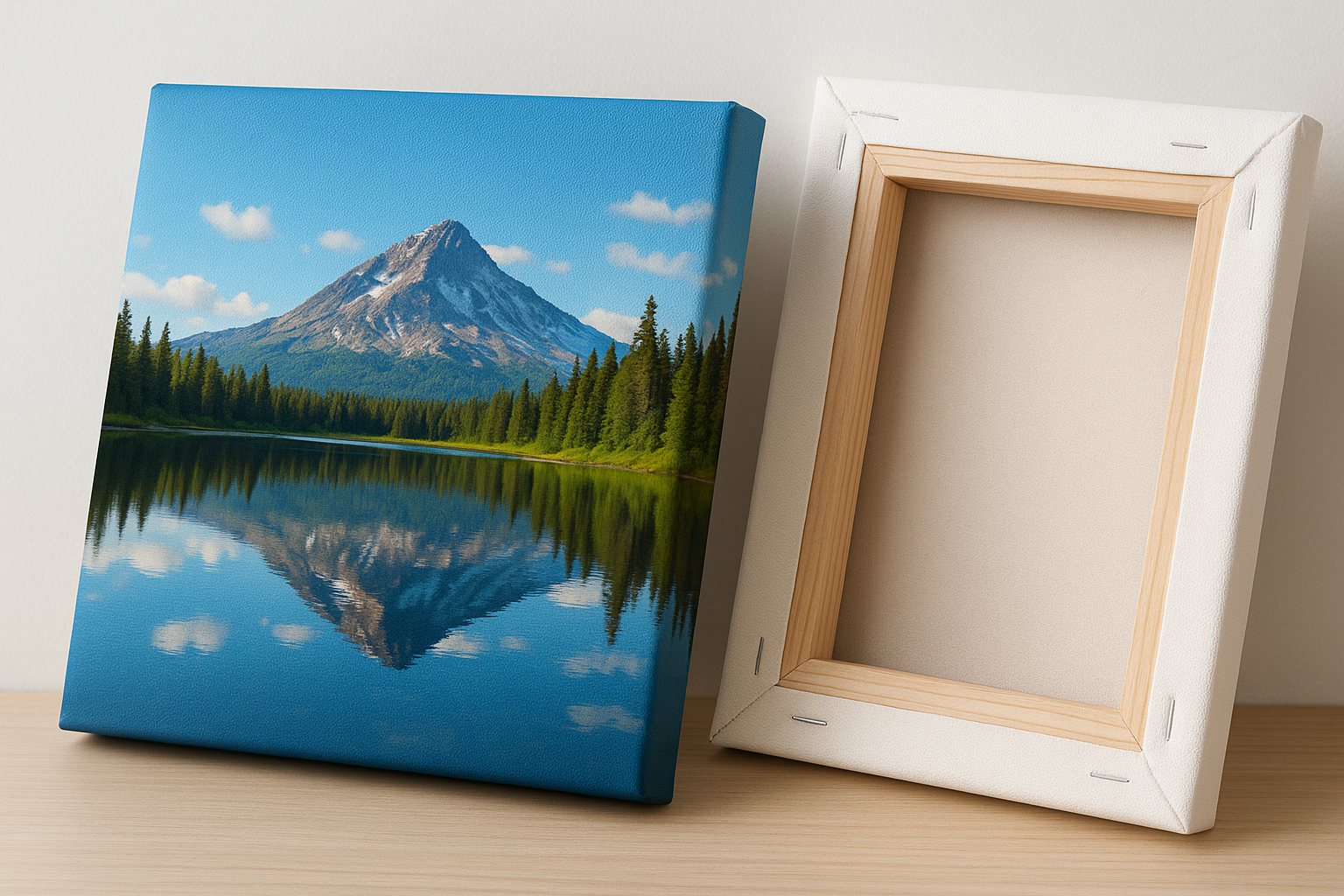
The wooden frame underneath is what gives a canvas print its gallery-style, frameless look. Without it, you just have printed fabric.
Frame depth also plays a role in the final appearance. Shallow frames, typically around 1.5 cm deep, give a subtle, close-to-wall profile. Deeper gallery-wrap frames, often 3.5 cm or more, make the print stand out from the wall more dramatically. On a gallery wrap, the image usually continues around the side edges, so no white border shows from an angle. Both styles are legitimate canvas prints; your choice simply depends on the look you want in your space.
What canvas prints are not
Canvas prints are not oil paintings or hand-painted artwork. The word "canvas" causes real confusion here because artists have painted on canvas for centuries. A canvas print uses that same base material, but the image comes entirely from a printer, not a brush. You are not buying a one-of-a-kind piece; you are buying a high-fidelity reproduction on a premium surface, which is a meaningful and worthwhile product in its own right.
They are also not the same as paper posters or standard photo prints. A typical photo print uses photographic paper with a glossy or matte finish. Canvas has a natural woven texture and matte appearance that absorbs light differently, which makes the image look less flat and more dimensional than a paper print. Paper prints also usually require a separate frame with glass, while canvas prints hang directly on the wall without any additional framing.
Canvas prints differ from acrylic glass prints as well. With acrylic, the image sits behind a clear sheet of acrylic material, which produces sharp color contrast and a glossy, contemporary finish. Canvas delivers warmth and texture instead. Neither format is objectively superior; they serve different aesthetics and rooms, which is why many buyers evaluate both options before deciding.
How canvas prints are made from file to wall
Understanding the production process helps you make smarter decisions when ordering. When people ask what are canvas prints, they often focus on the final product but skip the steps that determine its quality. The process moves from a digital file through several distinct production stages, and each one affects what ends up on your wall.
Preparing and printing the image
The process starts with a high-resolution digital file fed into a wide-format inkjet printer. These machines apply pigment-based inks directly onto the canvas fabric, where the ink penetrates the woven fibers rather than sitting on the surface. That penetration is why color on canvas looks integrated into the material rather than layered on top.
The resolution of your original file has a direct impact on final print sharpness, so higher-quality source images always produce better results.
File resolution and color accuracy both matter at this stage. Most professional printers require a minimum of 150 to 300 DPI at the intended print size. Reputable producers also manage the color conversion from RGB to CMYK carefully, because default conversions often shift hues in ways that look noticeably different from what you saw on screen.
Stretching, coating, and hanging
After printing, the canvas gets stretched tightly over a wooden stretcher bar frame and secured with staples at the back. The tension has to stay even across the entire surface, because uneven stretching causes visible warping or sagging over time. Quality producers check this step by hand rather than relying purely on automated systems.
The final step is applying a protective topcoat, typically a UV-resistant sealant that shields the printed surface against light degradation and minor moisture exposure. Some manufacturers add anti-glare coatings as well, which reduces reflections in rooms with direct overhead lighting. Once the coating cures, the print ships with a hanging system already attached so you can mount it on arrival without any extra hardware.
Types of canvas prints and popular styles
When shopping for wall art, you'll quickly find that "canvas print" covers several distinct formats. The type you choose affects installation, visual impact, and cost, so understanding the main categories helps you narrow down your options before you commit to a purchase. Not all canvas prints arrive or hang the same way, and those differences matter more than most buyers realize.
Stretched vs. rolled canvas prints
The most common format you'll encounter is the stretched canvas print, where the fabric is pulled tight over a wooden frame and arrives ready to hang. This is what most people picture when they ask what are canvas prints in a home decor context. The frame holds the canvas rigid, and the image typically wraps around the sides so no additional framing is needed.
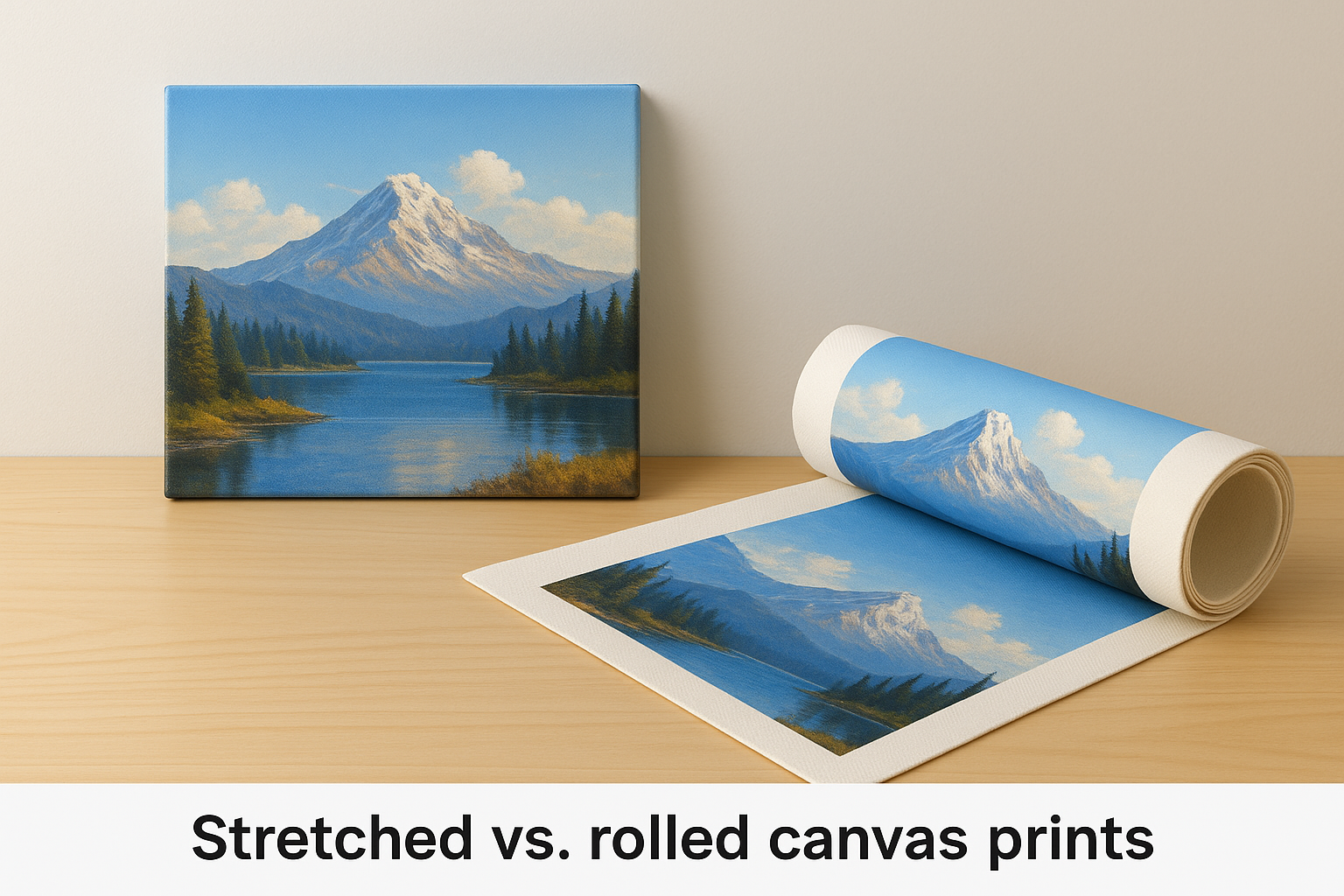
Stretched canvas prints are the most practical choice for most buyers because they arrive fully assembled with no extra materials required.
Rolled canvas prints, by contrast, ship flat without a frame and cost less to produce and ship. You need to stretch them yourself or take them to a framer. Rolled prints make sense if you want to use a custom frame, but for most buyers, stretched prints offer the more convenient and finished result.
Single panel vs. multi-panel layouts
A single panel canvas is one continuous image on one frame, which works well for portraits, landscapes, and statement pieces in any room. Most buyers start here because it suits almost any wall size and requires no complicated arrangement.
Multi-panel sets, sometimes called split or triptych canvases, divide one image or a coordinated group of images across two, three, or more separate frames. You hang them side by side with deliberate spacing to create a wider visual spread. These layouts work particularly well on long accent walls or above large furniture like sofas and beds.
Popular themes and subject matter
Canvas prints cover virtually every visual category, from nature photography and abstract art to mythology, dark fantasy, and historical imagery. The subject you choose should match both your personal taste and the mood of the room.
Bold, high-contrast themes like Viking imagery or dramatic sci-fi scenes work well as focal points in living rooms or home offices, while softer natural subjects tend to suit bedrooms and hallways better.
Canvas materials, inks, and build quality to look for
When you look at canvas prints side by side, the differences in material quality become obvious quickly. The fabric type, ink chemistry, and frame construction all determine how a print looks on day one and how well it holds up over years of exposure to light and humidity. Understanding these factors helps you separate a quality product from one that will fade or warp within a couple of years.
Canvas fabric: cotton, polyester, and blends
The base fabric is the first quality signal worth examining. Pure cotton canvas has a fine, natural texture that absorbs ink evenly and produces warm, detailed color reproduction. Polyester canvas costs less to produce and resists moisture better, but its texture can look slightly less natural in person. Most mid-to-high-quality producers use a cotton-polyester blend, which balances texture, color absorption, and durability at a reasonable price point.
The tighter the weave of the canvas, the sharper the final print will appear at close viewing distances.
Canvas weight also matters. Heavier fabric, measured in grams per square meter (GSM), holds its shape better under tension and resists the gradual sagging that cheaper, lighter materials develop over time.
Inks and coatings that affect longevity
Pigment-based inks outperform dye-based inks for canvas prints because they resist UV degradation far longer. A dye-based print in direct sunlight can show noticeable fading within a few years, while a pigment-ink print with a proper UV-resistant coating stays vivid for decades. When you ask what are canvas prints worth buying long-term, ink quality ranks as one of the most important factors to verify before purchasing.
Protective topcoats add another layer of defense. UV-resistant or archival coatings guard against moisture, dust, and light scratching, so look for producers that explicitly include this step in their production process.
Frame and stretcher bar construction
Kiln-dried wood stretcher bars hold their shape better than untreated wood, which can warp as indoor humidity fluctuates seasonally. Bar thickness and corner joinery affect long-term canvas tension as well. Well-built frames use interlocking corner brackets or notched joints that keep the fabric taut without loosening over time.
Pros and cons and canvas vs other print types
If you know what are canvas prints and how they're made, the next step is deciding whether they fit your specific situation. Canvas prints have genuine strengths, but they also come with real trade-offs that matter depending on your room, budget, and aesthetic preferences.
What canvas prints do well
Canvas prints excel at delivering a warm, gallery-style appearance without requiring a frame or glass. The woven texture gives images a handcrafted feel that paper prints simply cannot replicate, and the ready-to-hang format means you spend no extra time or money on additional hardware. Canvas prints also resist glare effectively, which makes them a practical choice for rooms with multiple light sources or large windows.
A quality canvas print with pigment inks and a UV-resistant coating will hold its color for decades, which makes it a long-term investment rather than a temporary decoration.
Where canvas prints fall short
The woven texture that gives canvas its character is also what limits sharpness for images with very fine detail at close viewing distances. Compared to a smooth acrylic or photographic paper surface, canvas can slightly soften sharp lines. High-humidity environments like bathrooms or kitchens also pose a problem, since canvas is less moisture-resistant than acrylic glass without additional protective sealing.
How canvas compares to other print formats
The table below summarizes how canvas stacks up against the two most common alternatives you'll encounter when shopping for wall art.
| Feature | Canvas Print | Paper/Photo Print | Acrylic Glass Print |
|---|---|---|---|
| Texture | Natural woven | Smooth | Smooth |
| Finish | Matte | Glossy or matte | High-gloss |
| Frame required | No | Usually yes | No |
| Glare resistance | High | Low to medium | Low |
| Moisture resistance | Moderate | Low | High |
| Best setting | Living rooms, bedrooms | Offices, galleries | Modern spaces |
Choosing between formats comes down to your room's lighting and overall design direction. Canvas suits warm, classic interiors, while acrylic glass fits contemporary spaces where sharp contrast and glossy surfaces make a stronger visual statement.
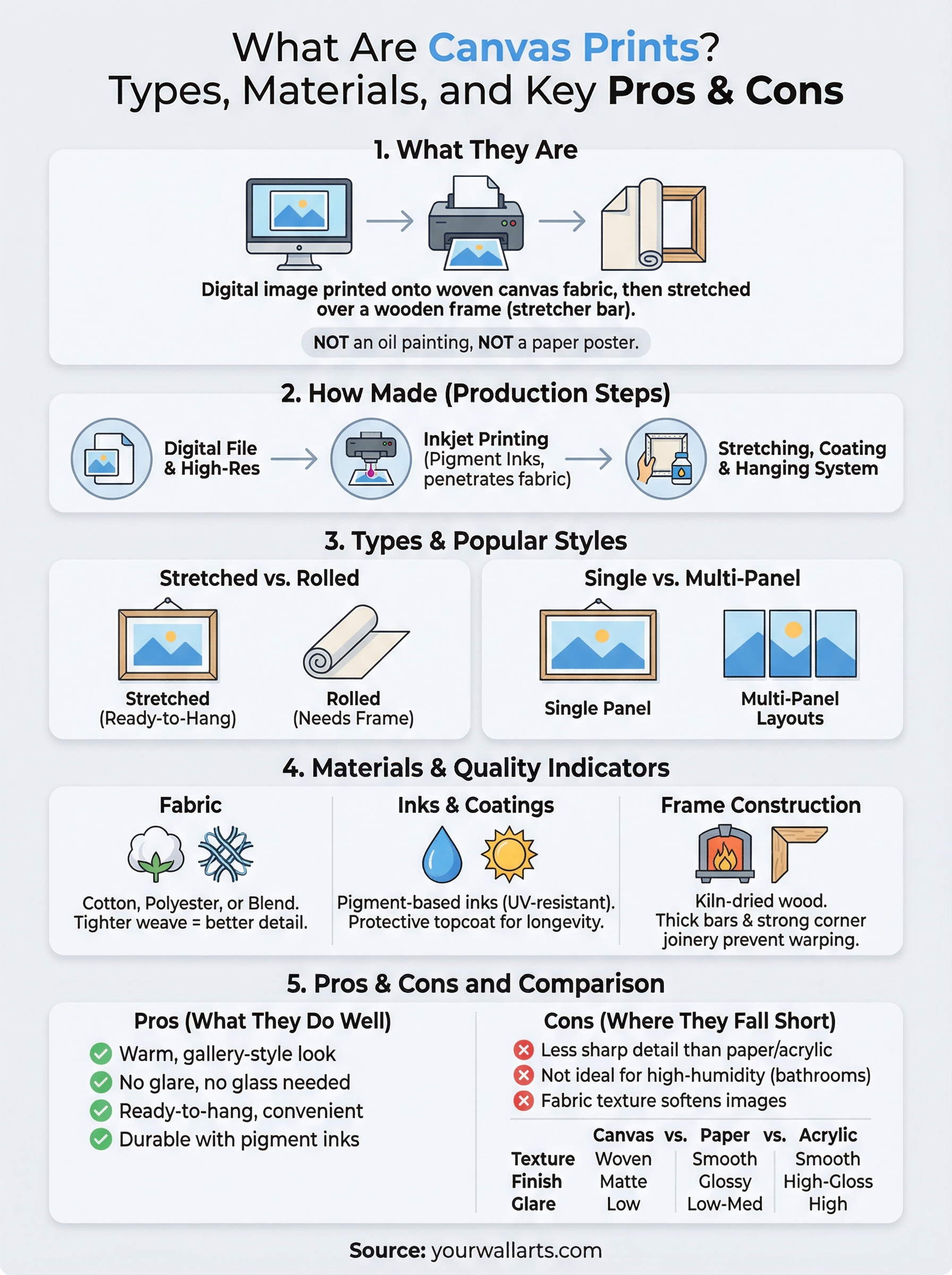
A simple way to choose your canvas print
Now that you know what are canvas prints and the key differences between formats, materials, and alternatives, the decision becomes straightforward. Start with your room's lighting. If your space gets strong direct light, canvas handles glare better than acrylic glass and suits that environment well. If you're decorating a modern, minimalist room where sharp contrast matters most, acrylic glass gives you that edge. Next, think about your subject matter. Bold, high-contrast themes like Viking mythology or dramatic fantasy art translate powerfully onto canvas, while very fine detailed photography may look crisper on acrylic.
Your budget and timeline also factor in. Canvas ships ready to hang, which saves you both time and the cost of additional framing. If you want gallery-quality wall art with a straightforward buying experience, browse the full collection at Yourwallarts and find a piece that fits your space from day one.
Shop Canvas Prints by Collection
Now that you know what canvas prints are and how they're made, here are some of our most popular collections to browse:
- Abstract Canvas Prints — expressive abstract art in canvas and acrylic glass, ready to hang
- Nature & Landscape Prints — forest, mountain and countryside scenes on premium stretched canvas
- Botanical Canvas Wall Art — floral and botanical prints that bring colour and freshness to any room
- Impressionism Canvas Prints — classic brushstroke-style artwork for elegant living rooms and offices
- Animal Canvas Prints — wildlife and pet art in striking canvas and high-gloss acrylic glass
Every Yourwallarts canvas print is custom-produced to order, ships free, and comes with a 30-day return guarantee.