

Canvas Print vs Acrylic Print: Which Looks Best In 2026?
So you've found the perfect image for your wall, but now comes the harder decision: canvas print vs acrylic print? Both options look great, both are durable, and both can completely change the feel of a room. The problem is, they do it in very different ways. Picking the wrong one means spending money on something that doesn't match your space or your style.
Canvas gives you that warm, textured, almost painterly look. Acrylic glass hits you with sharp clarity and a sleek, modern finish. The difference in person is bigger than most people expect. Price, durability, weight, and visual impact all shift depending on which material you go with, and those details matter when you're committing to something that'll hang on your wall for years.
At Yourwallarts, we produce both canvas and acrylic glass prints across dozens of collections, from nature and history to fantasy and sci-fi. We work with both materials daily, so we know exactly where each one shines and where it falls short. This guide breaks down every meaningful difference, appearance, cost, longevity, and installation, so you can choose with confidence before placing your order.
Why the print material matters for wall art
Most people focus on picking the right image and then treat the material choice as an afterthought. That's a mistake. The material you print on determines color depth, texture, light interaction, and the overall mood your art creates in a room. Choosing between canvas print vs acrylic print isn't just a finish preference; it's a decision that shapes how your entire wall looks from across the room and up close.
The material changes what you actually see
When you hang a canvas print, the ink sits on a textured woven surface that scatters light softly and gives the image a matte, almost handcrafted quality. Colors appear warm and slightly muted compared to the original digital file. That softness works in your favor in rooms with strong natural light or warm tones, but it does mean fine details and high-contrast areas won't hit as sharply as they would on a glossier surface.
Acrylic glass works the opposite way. The image gets printed and then mounted behind a clear acrylic panel, which amplifies color saturation and creates a luminous, almost backlit effect. Fine lines stay crisp, shadows read deeper, and highlights pop without any filter between the viewer and the image. The visual result sits closer to looking at a screen than looking at a painting, which is a strong statement in the right setting.
The surface your art is printed on doesn't just carry the image; it actively transforms how that image communicates in your space.
Room conditions affect how prints hold up
Lighting, humidity, and wall placement all interact differently depending on which material you choose. Canvas is more forgiving in rooms with fluctuating temperatures, such as a living room near a window or a bedroom in a humid climate. The fabric substrate handles minor environmental shifts without cracking or warping over time. Direct sunlight remains the main threat, and while UV-protective coatings help, canvas will fade faster than acrylic when exposed to prolonged harsh light.
Acrylic glass is denser and more resistant to UV exposure and moisture, which makes it a strong choice for bathrooms, kitchens, or any space with high humidity. The tradeoff is weight. A large acrylic panel is noticeably heavier than a comparable canvas, so your wall surface and hanging hardware need to handle the load. Solid walls or properly anchored drywall mounts will hold either format without issue, but it's worth planning for before you commit to a specific wall.
How canvas prints and acrylic prints are made
Understanding the production process helps you predict exactly how your finished piece will look on the wall. Canvas prints and acrylic prints go through completely different manufacturing steps, and those steps directly explain why each material delivers such a distinct visual result.
How canvas prints are produced
Manufacturers stretch a polyester-cotton blend fabric tightly across a wooden frame called a stretcher bar. A printer then applies ink directly onto the canvas surface using wide-format inkjet technology. The ink absorbs into the fabric fibers, which creates that characteristic matte, textured finish you see on the final piece. Once printed, a protective coating gets applied over the surface to guard against moisture and UV exposure. The built-in wooden frame means the piece arrives ready to hang without needing additional framing.
How acrylic prints are produced
Acrylic production works differently. The image gets printed onto photographic paper or a film substrate first, then that printed layer is face-mounted directly behind a clear acrylic panel using an optical-grade adhesive. This bonding process eliminates any air gaps between the image and the acrylic surface, which is exactly what produces that deep, saturated, luminous look. The acrylic panel itself acts as a lens, intensifying color and sharpening fine detail in a way that no surface coating on canvas can replicate.
The face-mounting process used in acrylic printing is the same technique professional photographers use for gallery exhibitions, which tells you a lot about the quality of the output.
When you compare the canvas print vs acrylic print production process side by side, the core difference is clear: canvas absorbs ink into its surface, while acrylic glass locks a printed image behind a protective optical layer that amplifies everything underneath it.
Acrylic vs canvas prints compared side by side
Putting canvas print vs acrylic print head to head reveals how differently each material handles the same image. Color, texture, light reflection, and weight all land in separate places depending on which format you choose, and a direct comparison makes those gaps concrete rather than abstract.
Visual qualities at a glance
The most noticeable difference between the two formats is how each handles color saturation and surface texture. Canvas softens colors and adds a visible grain across the image, while acrylic intensifies every tone and keeps the surface glass-smooth. That gap matters most when your image contains fine detail or deep shadows you want to preserve at full strength.
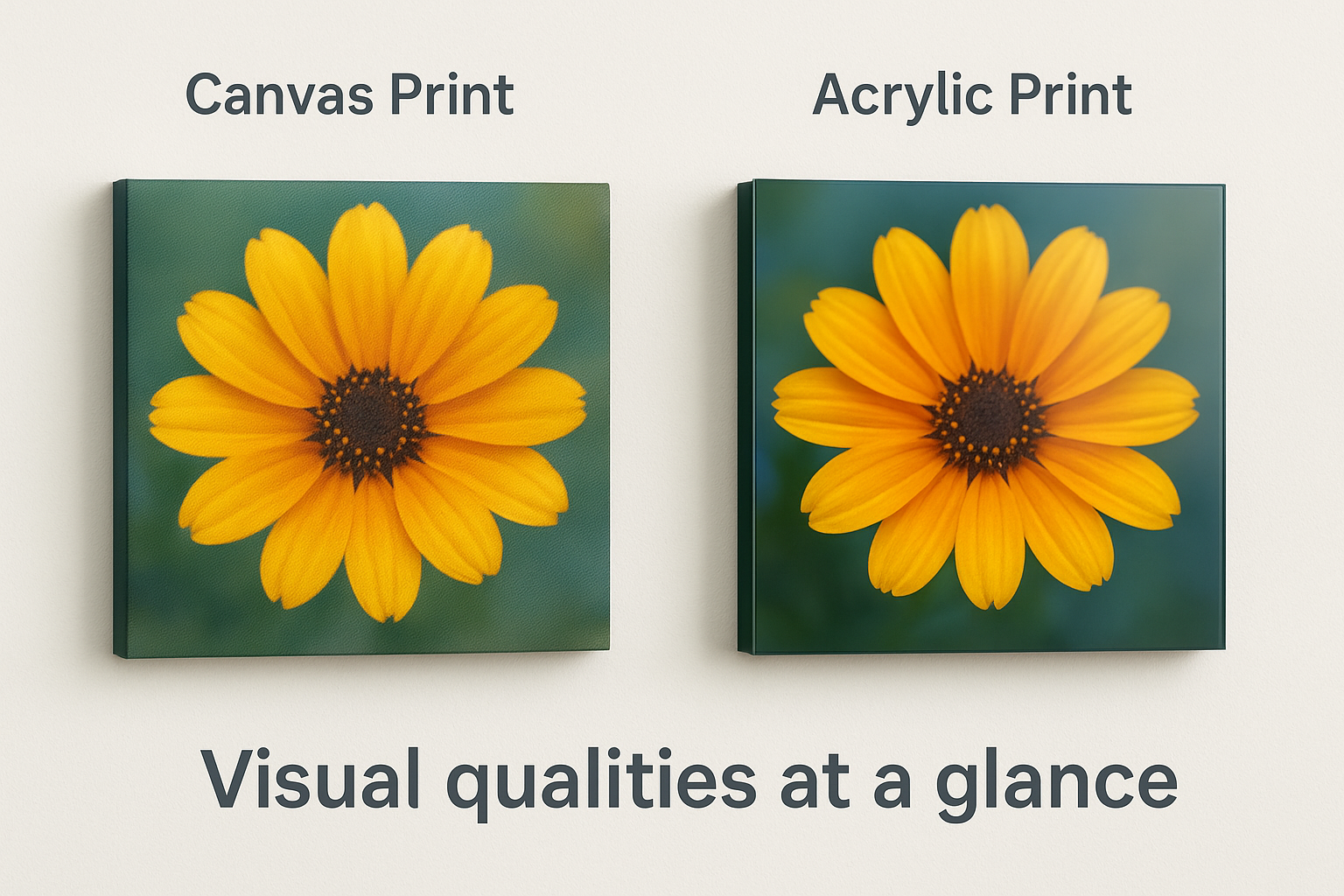
Acrylic prints consistently make colors appear noticeably more saturated than the same image on canvas, which is a significant shift in rooms with neutral or white walls.
| Feature | Canvas Print | Acrylic Print |
|---|---|---|
| Surface texture | Woven, matte | Smooth, glossy |
| Color saturation | Warm, slightly muted | Deep, vivid |
| Light reflection | Minimal glare | High gloss, some glare |
| Fine detail | Slightly softened | Sharp and crisp |
| Weight (large format) | Lighter | Heavier |
Durability and display conditions
Canvas handles fluctuating humidity better than most people expect, making it a reliable choice for bedrooms and living rooms where conditions stay relatively stable. Acrylic glass, by contrast, offers stronger resistance to UV light and moisture, which extends its lifespan in demanding environments like kitchens or sun-facing walls. Both formats hold up well under normal indoor conditions, but knowing your specific room helps you pick the one that stays looking sharp longest in your situation.
How to choose based on your photo and your space
The image you've chosen and the room it's going into are the two most reliable guides for deciding between a canvas print vs acrylic print. Your photo's content and your room's lighting conditions narrow the decision down fast once you know what to look for in each.
Match the print format to your image type
Not every image suits both formats equally. Photos with high contrast, deep shadows, or fine architectural detail look significantly better on acrylic glass, where the optical layer preserves every sharp edge and amplifies tonal range. Wildlife shots, city skylines, and abstract art with bold color gradients all gain impact behind acrylic.
Softer images benefit from canvas. Portraits, nature scenes with warm tones, and fantasy artwork with painterly qualities translate naturally onto a textured surface. The fabric grain adds character that works with those images rather than against them.
If your image already looks like a painting, canvas will lean into that quality. If it looks like a photograph, acrylic will protect what makes it striking.
Match the finish to your room
Room lighting is the deciding factor most people overlook. Acrylic glass reflects light, which means it creates glare in brightly lit spaces or rooms with multiple light sources aimed directly at the wall. If your wall gets direct sunlight for several hours a day, canvas handles that exposure more gracefully and still reads well without glare interference.
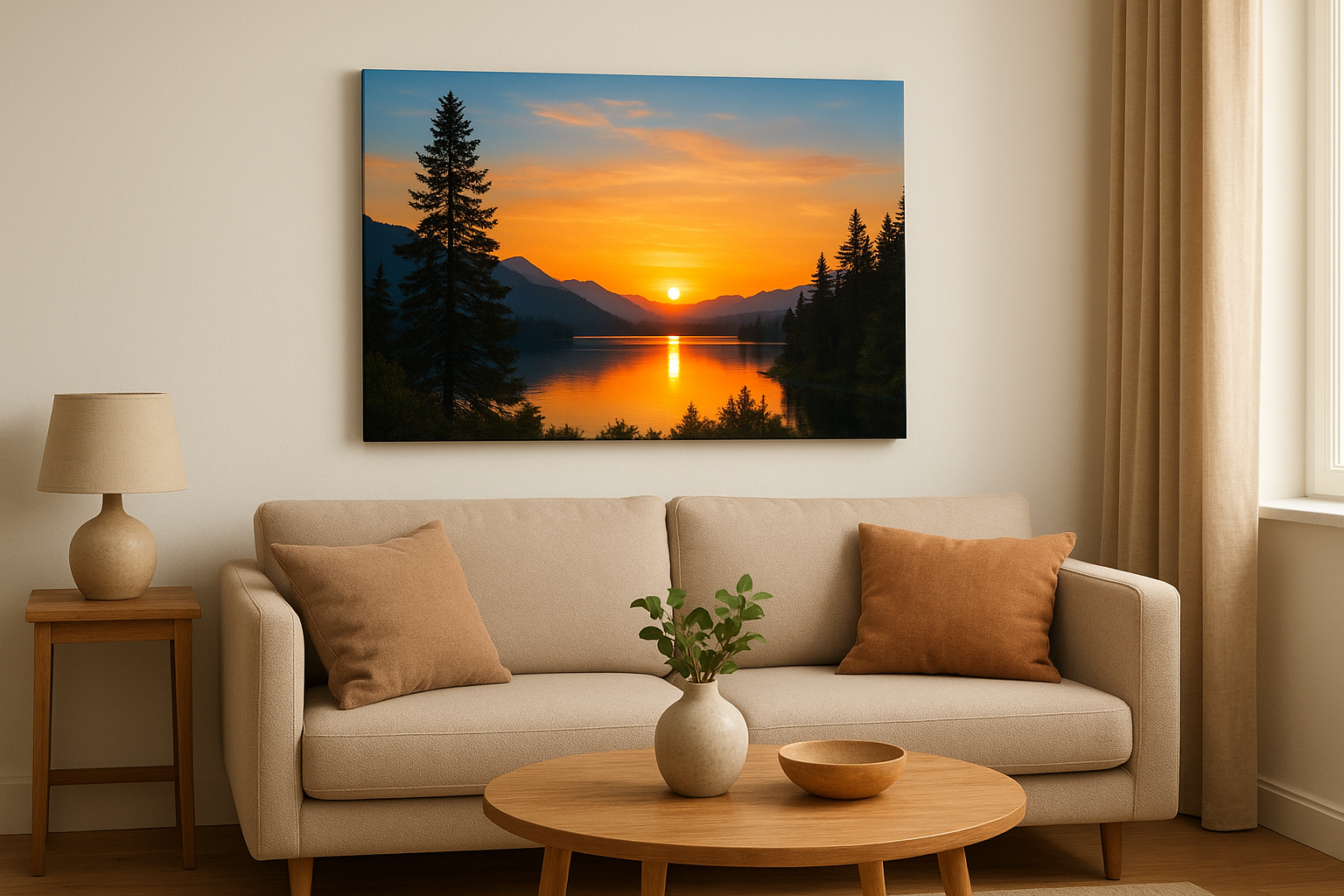
Modern rooms with white or neutral walls, minimal furniture, and track lighting are built for acrylic. Warm, layered spaces with softer ambient lighting, wood furniture, or exposed brick suit canvas far better. Match the finish to the room's existing energy rather than choosing purely on image content, and you will land in the right place.
Pricing, durability, and maintenance in real life
The canvas print vs acrylic print decision has a real cost dimension that goes beyond the sticker price. Acrylic glass prints typically run higher than canvas because the face-mounting process is more material-intensive and the optical-grade adhesive adds production cost. Canvas sits at a lower price point for equivalent sizes, which makes it the more accessible option if you're outfitting multiple rooms or working within a tight budget.
What you'll pay and what you'll get
Your investment in either format pays off differently over time. Canvas prints, when kept out of direct sunlight, hold their color and shape for well over a decade with zero upkeep beyond occasional light dusting. Acrylic glass, thanks to its UV-resistant surface and sealed construction, outlasts canvas in bright or humid environments and often looks as sharp after ten years as it did on day one.
Spending slightly more on acrylic for a statement wall in a sun-facing room saves you the cost of replacing a faded canvas in three years.
Keeping your prints in good shape
Maintenance for canvas is straightforward. A soft dry cloth or a brush attachment on a low-power vacuum removes dust without damaging the surface. Avoid water or cleaning sprays, as moisture can warp the fabric or loosen the coating over time.
Acrylic glass requires a microfiber cloth and a small amount of plastic-safe cleaner to remove fingerprints and smudges without scratching the surface. The glossy finish shows marks more readily than canvas, so it benefits from a quick wipe-down every few weeks. Both formats are low-maintenance overall, and neither requires professional care to stay looking sharp for years.
Quick wrap-up
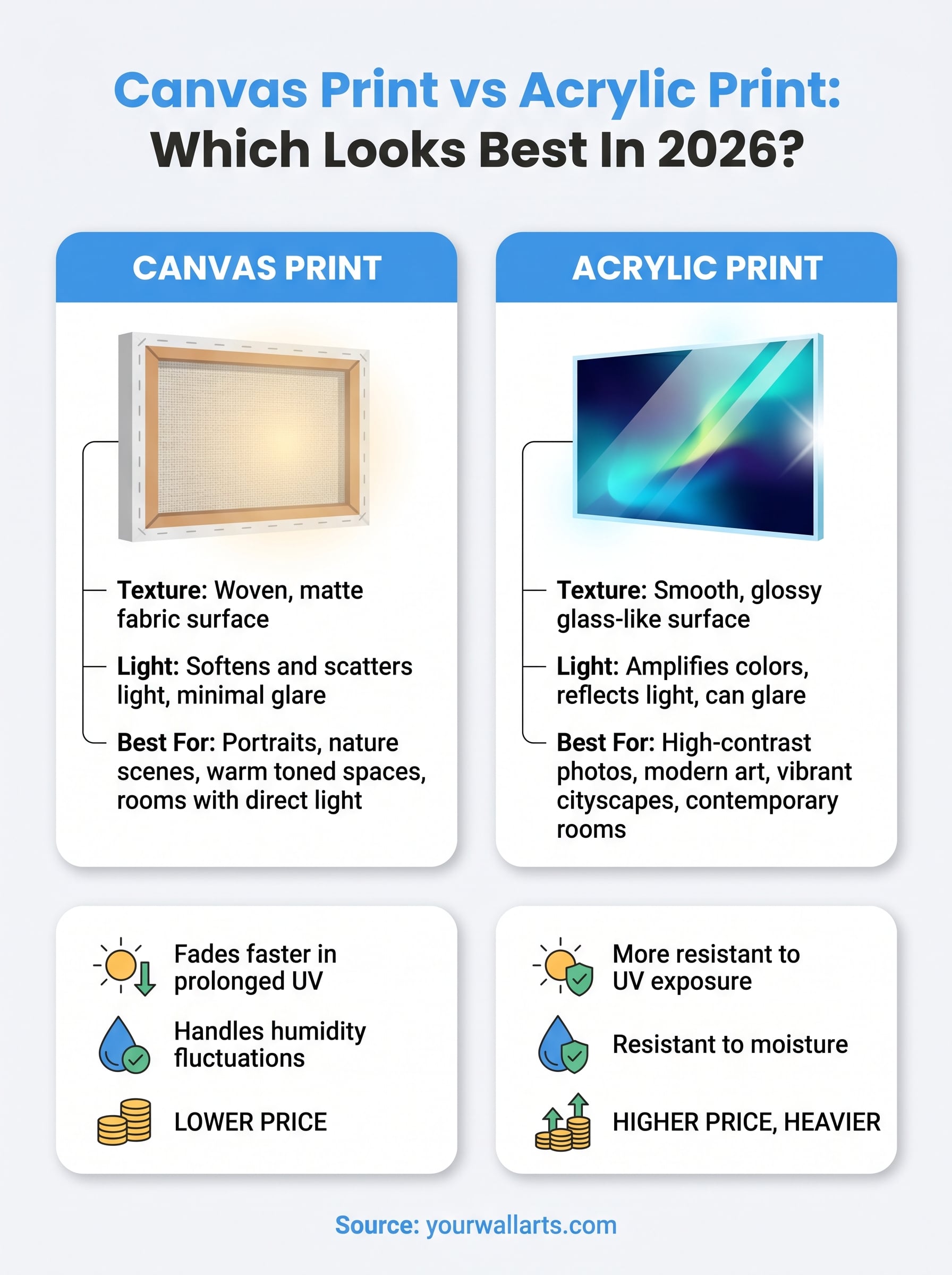
The canvas print vs acrylic print decision comes down to two things: your image type and your room's conditions. Canvas delivers a warm, textured finish that suits portraits, nature scenes, and spaces with soft ambient lighting. Acrylic glass brings sharp color and a sleek, modern presence that works best in bright, contemporary rooms where high contrast images can fully shine.
Both formats hold up well over time with minimal care. Canvas handles humidity and temperature shifts with ease, while acrylic glass resists UV light and moisture better in demanding spaces. Neither choice is wrong; the right one simply depends on what you're hanging and where you're hanging it.
If you're ready to see both options applied to artwork that actually fits your style, browse the full collection at Yourwallarts and find the piece and finish that belong on your wall.