

How To Decorate A Large Living Room Wall: 8 Ideas That Wow
A big, blank wall can make even a well-furnished living room feel incomplete. You've got the couch, the coffee table, maybe a nice rug, but that empty stretch of wall just sits there, pulling attention for all the wrong reasons. If you've been wondering how to decorate a large living room wall, you're not alone. It's one of the most common design challenges homeowners face, and the good news is that solving it doesn't require an interior designer or a massive budget.
The trick is choosing pieces and arrangements that match the scale of the wall without overwhelming the room. Whether you lean toward bold statement art, a curated gallery layout, or something more minimal, there's a strategy that fits your style. At Yourwallarts, we help people transform empty walls every day with premium canvas and acrylic glass prints, so we know a thing or two about what works and what falls flat.
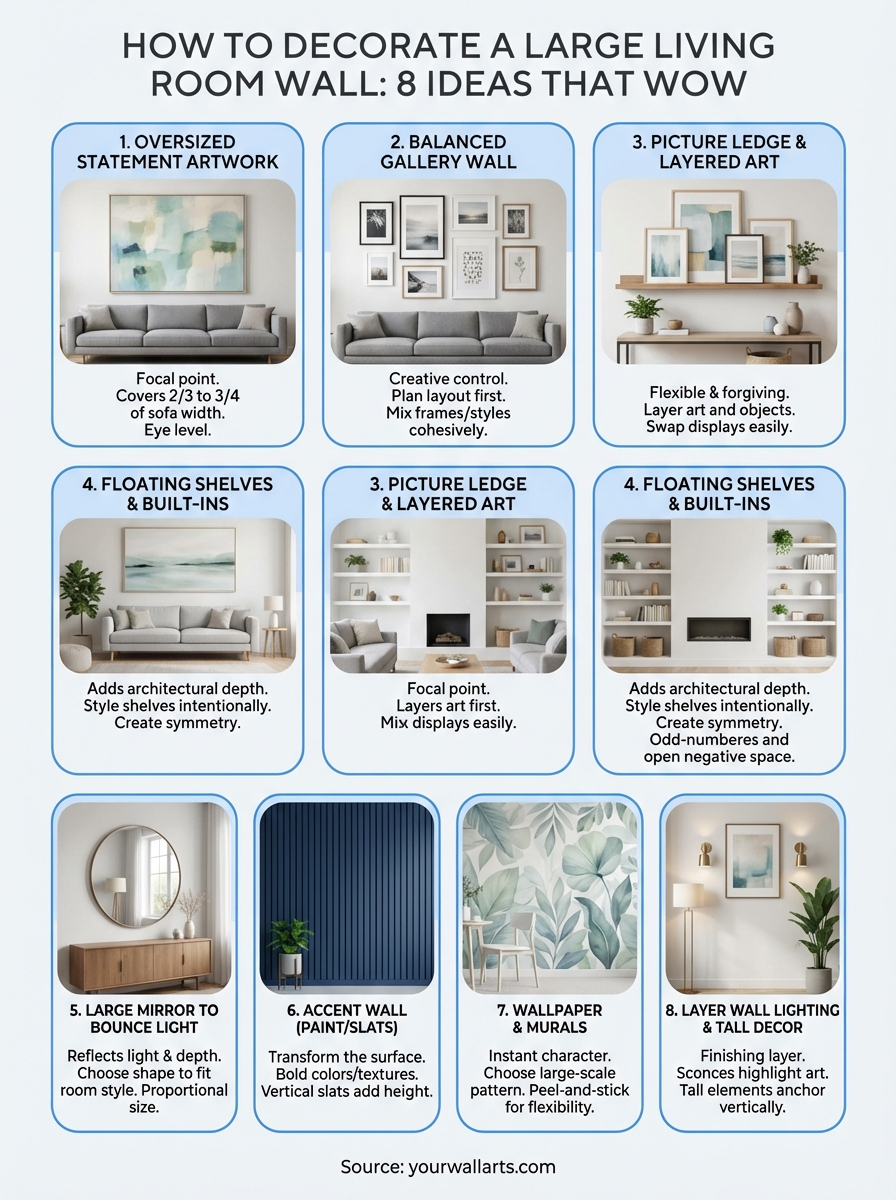
In this guide, we'll walk you through 8 proven ideas to fill that large wall with personality and intention. Each one is practical, adaptable, and designed to help you create a living room that actually feels finished.
1. Hang one oversized statement artwork
One oversized piece is often the simplest and most effective solution when you're figuring out how to decorate a large living room wall. Instead of filling every inch with smaller items, a single large artwork gives the wall a clear focal point and lets the room breathe naturally around it.
Why one large piece fixes a big blank wall fast
Large walls need visual weight to feel grounded. A small or medium print gets swallowed by the surrounding space, which makes the wall look even emptier than before. One statement-sized artwork solves this in a single move without requiring you to plan a complex arrangement or source multiple pieces at different times.
How to pick the right size for your wall and sofa
A reliable guideline is to choose artwork that covers two-thirds to three-quarters of the width of your sofa. If your sofa is 84 inches wide, aim for a piece between 56 and 63 inches wide. For walls without furniture below, the art should fill at least 50% of the wall's width so it holds its own without looking undersized against the open space.
When in doubt, size up. Art that reads slightly large looks intentional; art that reads slightly small looks like a mistake.
Choose canvas or acrylic glass for the look you want
Canvas prints deliver a warm, textured surface that works well in traditional, bohemian, or rustic rooms. Acrylic glass prints offer sharp contrast and a sleek, high-gloss finish that suits modern and contemporary interiors. Both options from Yourwallarts ship ready to hang, so you go straight from unboxing to displaying your piece on the wall.
Where to place it and how high to hang it
Hang the center of the artwork at eye level, which sits roughly 57 to 60 inches from the floor. When placing art above a sofa, leave 6 to 8 inches of space between the top of the sofa back and the bottom edge of the frame so the furniture and art feel visually connected rather than floating apart.
Cost and effort level
Cost: Low to moderate, depending on the size and material you choose. Effort: Low. You need one anchor point, one piece, and you're finished in under an hour.
2. Build a balanced gallery wall
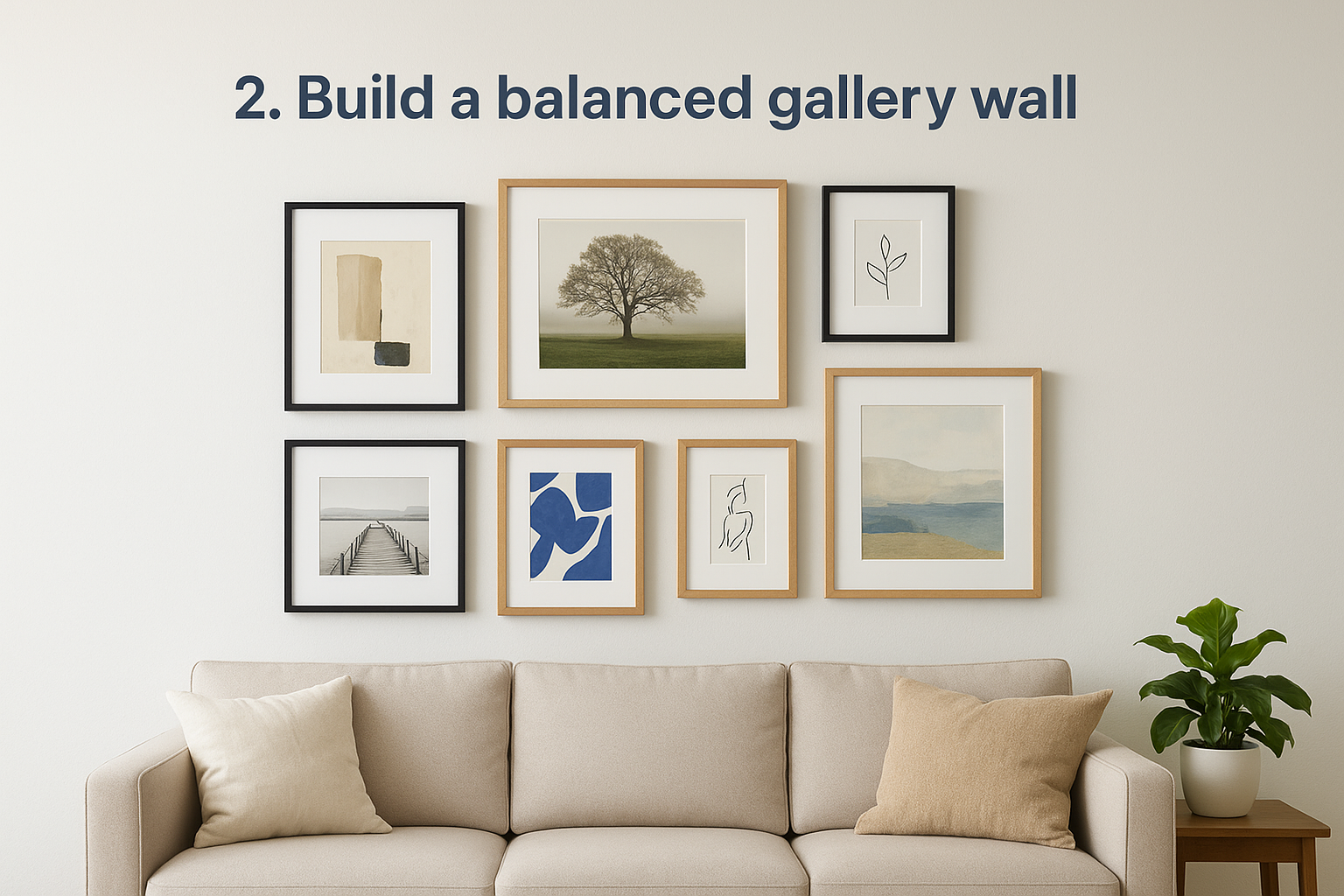
A gallery wall gives you creative control over a large living room wall by letting you build the composition piece by piece. This works especially well when you want to display a mix of prints, photos, or art styles without committing to one single oversized piece.
When a gallery wall beats a single oversized piece
A gallery wall works best when your wall is wider than it is tall or when you want to tell a visual story across multiple images. It also suits you well if you already own several smaller prints and want to combine them into one cohesive display rather than scatter them around the room.
Pick a layout style that stays cohesive
Choose between a grid layout for a clean, structured look or a salon-style arrangement for something more organic. Stick to one layout type per wall so the result reads as intentional rather than accidental.
The easiest way to test a layout is to trace each frame on paper, cut it out, and tape the shapes to the wall before you pick up a hammer.
Plan spacing, alignment, and hanging height
Keep 2 to 3 inches between each frame for a tight, curated feel. Center the entire arrangement at 57 to 60 inches from the floor, the same standard you would use for a single piece.
Mix frames, mats, and art types without chaos
Limit yourself to two or three frame colors across the whole wall. A consistent mat color, like white or off-white, ties together prints of different sizes and styles without creating visual noise.
Cost and effort level
Cost: Low to moderate, depending on the number of pieces you use. Effort: Medium. Planning the layout on paper first saves you from unnecessary nail holes and repositioning later.
3. Add a picture ledge and layer framed art
Picture ledges are one of the most flexible and forgiving ways to handle a large living room wall. Unlike nailed frames, ledges let you swap, rearrange, and refresh your display without adding new holes to the wall every time.
Why ledges feel flexible on large walls
A ledge system works especially well on wide, expansive walls because you can stretch multiple ledges across the full width and fill the space gradually. You don't have to figure everything out at once, which makes this approach great if your art collection grows over time.
How to choose ledge length and number of rows
Match the ledge length to at least two-thirds of your wall's width for balanced coverage. Two rows of ledges stacked 12 to 18 inches apart tend to fill vertical space well without feeling crowded.
Three ledges at different lengths, staggered slightly, can add rhythm and keep the wall from looking too uniform.
How to layer art, objects, and books without clutter
Lean larger framed prints at the back of the ledge, then place smaller frames and a few objects like a small plant or ceramic piece in front. Limit decorative objects to one or two per shelf section so the display stays purposeful rather than busy.
Safety and anchoring tips for heavy frames
Always anchor ledges into wall studs rather than drywall alone, especially if you plan to rest heavier canvas or acrylic glass prints on them.
Cost and effort level
Cost: Low to moderate. Effort: Low to medium, depending on how many ledges you install.
4. Install floating shelves or built-ins for depth
Floating shelves and built-ins give a large living room wall more than just storage. They add architectural depth that art alone can't provide. When you think about how to decorate a large living room wall, adding a three-dimensional layer to a flat surface makes the entire space feel more considered and complete.
Decide between floating shelves and full built-ins
Floating shelves cost less and install faster, making them the right call if you rent or want flexibility to change things later. Full built-ins require more investment but create a seamless, custom look that integrates permanently with the room's structure.
Use shelf styling rules that look intentional
Style your shelves in odd-numbered groupings of objects, and vary the height of items across each shelf so nothing looks too uniform. Keep one-third of each shelf open to prevent a cramped appearance and let the wall itself remain part of the composition.
Negative space on a shelf is not wasted space; it's what makes the rest of the display stand out.
Create symmetry around a fireplace or TV wall
Place matching shelves on both sides of a fireplace or television for a balanced, anchored composition. Symmetry makes a large wall feel structured rather than scattered, and it frames your focal point cleanly.
Hide cords, media, and everyday clutter
Route cables through cable management channels mounted along brackets or inside the wall where possible. Closed baskets on lower shelves keep everyday items out of sight so the display stays clean.
Cost and effort level
Cost: Moderate to high for built-ins; low to moderate for floating shelves. Effort: Medium to high.
5. Use a large mirror to bounce light and fill space
A large mirror is one of the most underused tools when figuring out how to decorate a large living room wall. Beyond filling space, a well-placed mirror reflects light and depth across the room, making the entire area feel more open and alive without adding visual clutter.
Choose a mirror shape that fits your room style
Your room's existing lines should guide your mirror choice. Round and oval mirrors soften rooms with lots of right angles, while rectangular mirrors reinforce the structured feel of modern or minimal spaces. Arched mirrors sit comfortably in transitional rooms and add a subtle architectural quality.
Size and placement rules that look proportional
A mirror should span at least 24 to 36 inches on its shortest side to register as a proper statement piece on a large wall. Center it at eye level, following the same 57 to 60 inch standard used for framed artwork.
A mirror that reads too small on a large wall looks like decorative filler rather than a deliberate design choice.
Leaning vs hanging and how to secure it
Leaning a large mirror against the wall creates a relaxed, layered look, but you must anchor it to a wall stud with a safety wire to prevent tipping. Hanging it flat gives a cleaner result and works better above a console table or fireplace mantel.
Pair mirrors with art and lighting for a finished wall
Place a sconce or floor lamp nearby so the mirror reflects light intentionally. Flanking the mirror with smaller framed prints ties it into a complete wall composition rather than leaving it isolated on an otherwise bare surface.
Cost and effort level
Cost: Moderate. Effort: Low to medium, depending on whether you lean or mount the mirror.
6. Create an accent wall with paint, paneling, or slats
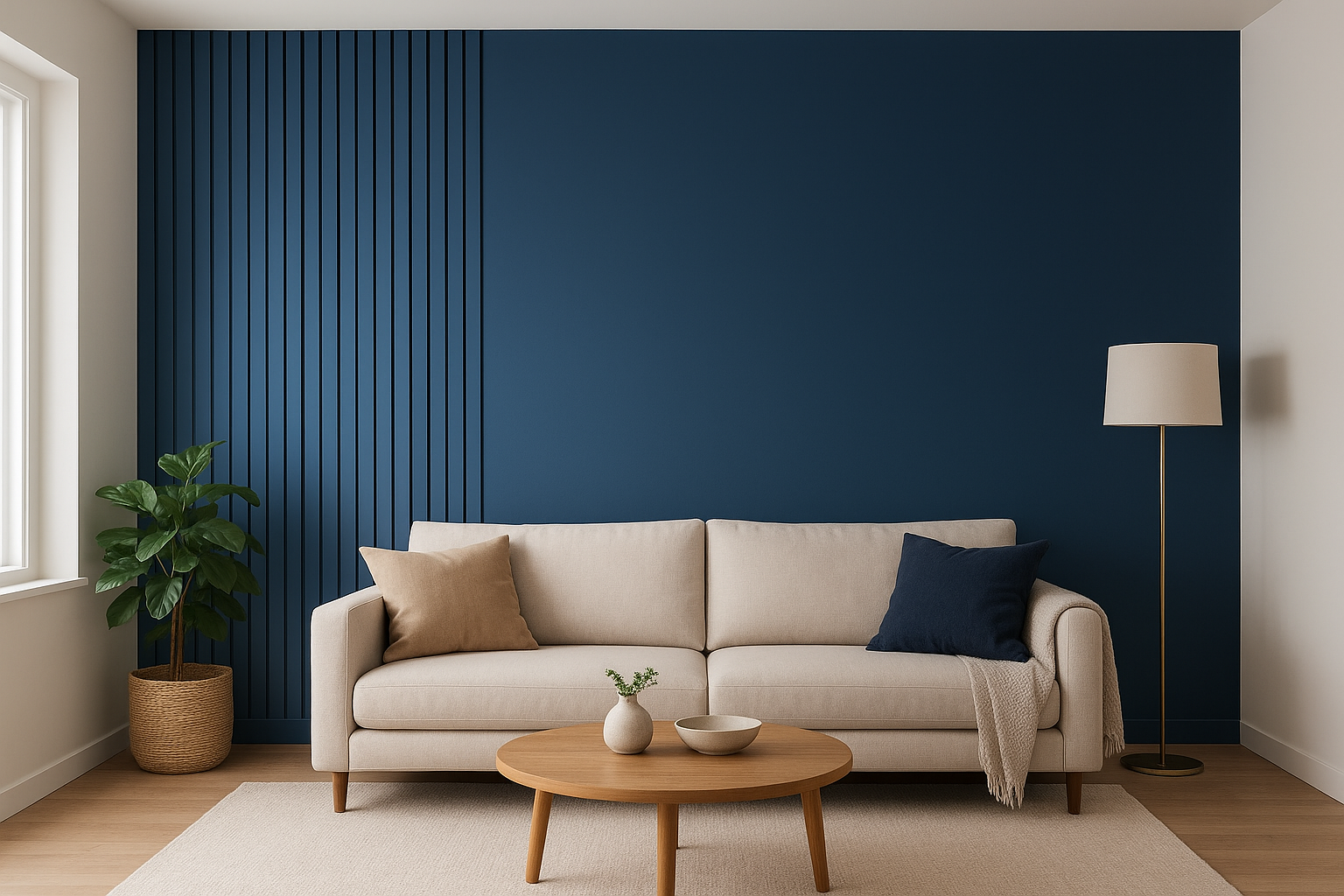
When you think about how to decorate a large living room wall, changing the surface itself is often more impactful than anything you hang on it. An accent treatment transforms a flat, uninteresting wall into an architectural feature the whole room builds around.
Pick the right accent treatment for your wall type
Smooth drywall works with paint, paneling, and slats equally well. If your wall has texture or imperfections, wood slats or panels are your best option because they cover the surface rather than highlighting its flaws.
Choose colors and finishes that don't shrink the room
Deep, saturated colors like navy, forest green, or charcoal work well on large walls because the scale prevents them from feeling oppressive. Stick to matte or eggshell finishes to absorb light evenly and avoid the washed-out glare that semi-gloss creates on big surfaces.
A color that looks overwhelming on a small sample card often reads as rich and grounded once it fills a full wall.
Use paneling and slats to add texture and height
Vertical slats draw the eye upward, which makes ceilings feel higher and walls feel more substantial. Horizontal paneling adds a calming, structured quality that suits coastal and contemporary rooms.
Avoid common accent-wall mistakes on large walls
Avoid painting only a partial section of a large wall, as it creates an unfinished look. Always extend your treatment edge to edge so the wall reads as a complete, deliberate feature.
Cost and effort level
Cost: Low to moderate for paint; moderate for paneling or slats. Effort: Medium.
7. Add wallpaper or a mural for instant character
Sometimes the best way to tackle how to decorate a large living room wall is to transform the surface itself into the decoration. Wallpaper and murals eliminate the need to source and hang multiple separate pieces by turning the wall into one unified visual statement.
When pattern makes more sense than more decor
Pattern works best when your room already has clean, simple furniture that won't compete with a bold backdrop. A large mural or graphic wallpaper also suits rooms where you want strong character without adding hardware, shelves, or frames to manage.
Choose scale and pattern that won't overwhelm
Large walls can handle bigger pattern repeats than small rooms can. Oversized botanicals, scenic murals, and abstract shapes all read well at scale without losing their impact.
Avoid tight, small-scale patterns on a big wall since they create visual noise rather than a clear focal point.
Stick to two or three dominant colors within any pattern so the wall adds richness without fragmenting the room visually.
Go removable for rentals and frequent refreshes
Peel-and-stick wallpaper now comes in hundreds of styles that closely match traditional paste options. This format lets you swap the look entirely without damaging the wall surface underneath, which makes it ideal for renters or anyone who redecorates often.
Coordinate wallpaper with rugs, sofas, and curtains
Pull one or two colors directly from your wallpaper into your soft furnishings. Your rug and curtains are the easiest places to echo a wall color without overhauling the rest of the room.
Cost and effort level
Cost: Low to moderate for peel-and-stick; moderate to high for traditional paste or custom murals. Effort: Medium.
8. Layer wall lighting and tall decor for a complete look
Lighting and tall decor are the finishing layer that separates a styled wall from a room that feels complete. When you think about how to decorate a large living room wall, treating light as part of the display rather than an afterthought makes every piece look more intentional and polished.
Use sconces and picture lights to make art feel premium
Wall sconces and picture lights direct attention toward your artwork and create warmth across a large surface. Aim them at your primary focal piece to establish it as the clear anchor of the entire wall.
Lighting positioned beside or above a canvas or acrylic glass print gives it the same elevated presence you'd expect in a gallery setting.
Balance the wall with tall plants, lamps, and curtains
Floor lamps and tall plants placed at the edges of a large wall anchor the composition vertically. Floor-length curtains that run the full wall height add softness and naturally draw the eye upward.
Build a simple "focal point plus flankers" layout
Place your primary artwork or mirror at the center, then flank it symmetrically with lamps, plants, or sconces on each side. This three-part structure gives the wall a clear visual rhythm without requiring complex planning.
Choose bulbs and brightness for comfort and mood
Use warm white bulbs in the 2700K to 3000K range for a relaxed, inviting atmosphere. Dimmer switches let you adjust brightness based on the time of day or the mood you want to create.
Cost and effort level
Cost: Low to moderate. Effort: Low.
Final thoughts
A large living room wall doesn't have to feel like a problem to solve. Every idea in this guide works at scale, and most require less effort than you'd expect once you pick the right starting point. Whether you go with a single oversized print, a gallery wall, or layered lighting, the goal is the same: give the wall a clear purpose that makes your whole room feel more complete.
When you're thinking through how to decorate a large living room wall, start with one method and build from there. Combining two or three of these ideas, like a statement artwork with flanking sconces and a tall plant, creates a finished, layered result without overcomplicating the process.
If you're ready to anchor your wall with a standout piece, browse the premium canvas and acrylic glass prints at Yourwallarts and find something that fits your style and space.