

What Is A Gallery Wrapped Canvas? Edges, Depth & Framing
If you've ever shopped for canvas prints, you've probably come across the term and wondered: what is a gallery wrapped canvas? It's one of the most popular ways to display art on a wall, but the name alone doesn't tell you much about what makes it different from a standard stretched canvas or a framed print. Understanding the construction matters, especially when you're choosing art that needs to look sharp on your wall for years.
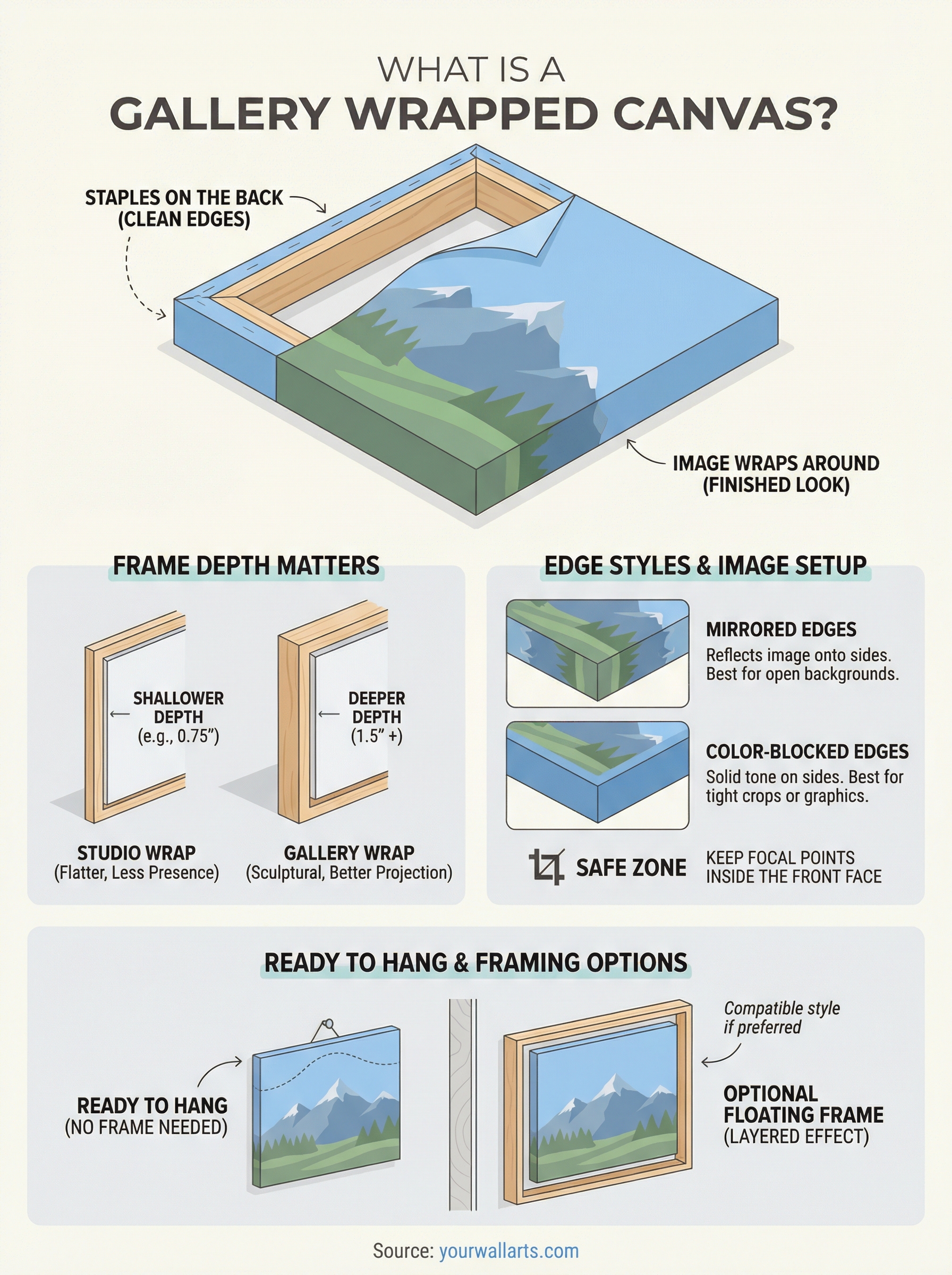
A gallery wrap refers to a specific method of stretching canvas around a wooden frame so the image extends over the edges, creating a clean, finished look from every angle. No visible staples on the side. No need for an external frame. It's a technique that gives prints a modern, polished appearance while keeping things simple. At Yourwallarts, our canvas prints use this same principle, ready to hang right out of the box, with a built-in hanging system included.
This article breaks down exactly how gallery wrapped canvases are built, what sets them apart from studio wraps and museum wraps, and whether framing one even makes sense. By the end, you'll know what to look for when picking the right canvas style and which finish best fits your space.
Why gallery wrap matters for wall art
When you hang something on a wall, the display method carries as much visual weight as the image itself. A canvas print that ends abruptly at a visible stapled edge looks unfinished, even if the image is stunning. Gallery wrapping solves that problem by turning the sides of the canvas into a continuation of the design, so the piece looks intentional and complete from every angle. Understanding what is a gallery wrapped canvas helps you make a smarter buying decision before you commit to a print size and style.
The frame depth changes everything
The wooden stretcher bars that hold the canvas in place come in different thicknesses, typically ranging from 3/4 inch to 2 inches or more. That depth is what gives a gallery wrapped canvas its sculptural quality. A thinner frame sits close to the wall and reads more like a flat print. A deeper frame projects away from the wall and creates a shadow line along the edges that adds dimension to your room without requiring any additional hardware or accessories.
The depth of the stretcher bars is one of the biggest factors in how a gallery wrapped canvas reads in a room, and it's often overlooked when ordering online.
Deeper frames also tend to feel more substantial in hand and on the wall. If you're placing art in a living room or a high-traffic space where people will look closely at the piece, a frame with at least 1.5 inches of depth tends to make a stronger visual impression than a shallow alternative. That extra projection catches light differently throughout the day, which keeps the piece feeling dynamic rather than flat.
How the edge treatment affects the overall look
The image wrap around the sides is not an afterthought. Mirrored edges reflect a strip of the image back onto the sides, which works well for photographs or prints where cutting into the focal point would look awkward. Color-blocked edges paint the sides in a solid tone that complements the main image, giving the piece a clean, graphic feel. Both approaches keep the sides looking finished rather than raw or accidental.
Your choice of edge treatment also affects how much of your original image stays visible on the front face of the canvas. If the composition is cropped tightly around a subject, mirrored edges can sometimes repeat a detail that pulls attention away from the front. Matching your edge style to the image content keeps the final result looking cohesive.
Why it beats traditional frames for most spaces
Framing adds cost, bulk, and extra weight to your wall. A gallery wrapped canvas is self-contained by design, which means you skip the added material and get a print that hangs right away. For anyone building a gallery wall with multiple pieces, that simplicity matters. The lightweight construction and built-in finished edge make rearranging easy without needing to source matching frames across different prints.
How a gallery wrapped canvas is made
Understanding the construction of a gallery wrapped canvas helps you evaluate quality before you buy. The process involves three core components: the canvas material itself, the wooden stretcher bars, and the method used to pull and secure everything together. Each step in that process directly affects how the finished piece looks on your wall and how long it holds up over time.
Building the stretcher bar frame
The internal frame consists of interlocking wooden stretcher bars that slot together at the corners to form a rectangle. Quality bars use a slight outward curve along the inner edge, which keeps the canvas from resting directly on the wood and prevents pressure marks from appearing on the front surface. The frame depth determines how far the finished canvas projects off your wall, and thicker bars generally signal better structural stability.
The quality of the stretcher bars is what separates a canvas that stays taut for years from one that warps or sags within months.
Manufacturers typically use kiln-dried pine or basswood to reduce warping caused by humidity changes. If the wood hasn't been properly dried, the frame can twist over time and cause the canvas to loosen or bubble in certain spots.
Stretching and stapling the canvas
Once the frame is assembled, the canvas is pulled tight across the front face and wrapped around each side before being stapled to the back of the frame, not the sides. This is the defining step in understanding what is a gallery wrapped canvas. Moving the staples to the back keeps all four sides completely clean and visible. The tension applied during stretching needs to be even across all four sides to prevent sagging or diagonal pull lines from appearing on the front surface.
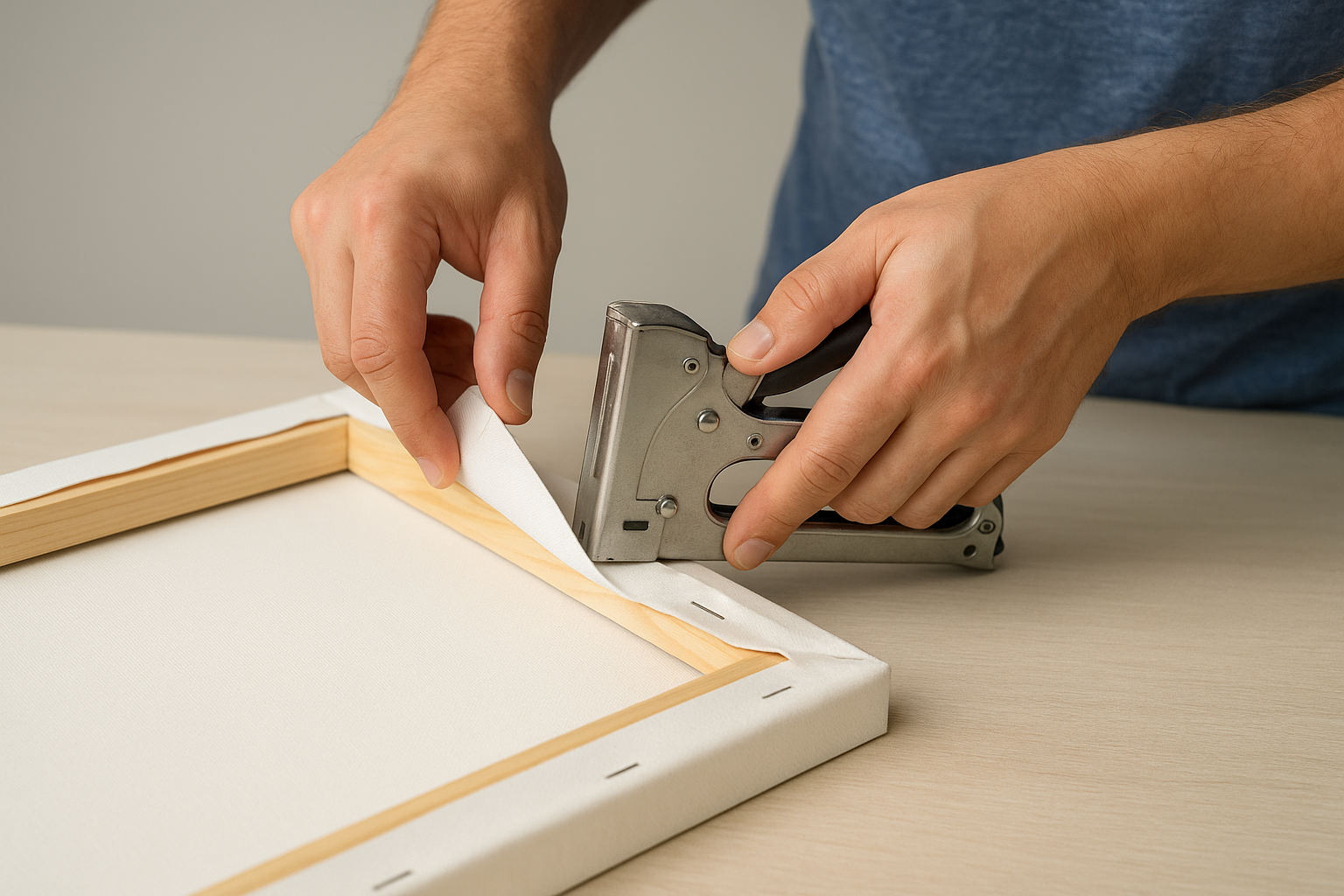
The canvas itself is usually a polyester-cotton blend or a pure cotton weave, coated with a gesso primer that allows ink to absorb cleanly and produce sharp color definition.
Gallery wrap vs studio wrap and other options
Once you understand what is a gallery wrapped canvas, the next question is how it compares to the other display options you'll encounter while shopping for wall art. The key differences come down to frame depth, edge treatment, and whether the canvas needs additional hardware to look finished on a wall.
Studio wrap: the shallower version
A studio wrap uses the same stretching technique as a gallery wrap, but the stretcher bars are significantly shallower, typically around 3/4 inch deep. The result is a canvas that sits close to the wall with less visual projection. Studio wraps work fine for casual spaces or smaller prints, but the reduced depth makes the piece feel less substantial compared to a gallery wrap, especially when you're hanging art as a focal point in a living room or bedroom.
If you're placing a large print in a prominent spot, a gallery wrap's deeper frame creates a visual presence that a studio wrap simply cannot match.
Some manufacturers also use the term museum wrap to describe an extra-deep gallery wrap, usually 2 inches or more in projection. The construction is identical to a standard gallery wrap, with the only real difference being how far the piece extends off the wall.
Framed prints and flat canvas
A framed print places a border of wood, metal, or composite material around the outside of the canvas or paper print. This adds cost and weight, and it changes the overall aesthetic considerably. Framing works well for traditional interiors or when you want a specific border color to match your decor, but it requires more planning to get sizing and style right.
Flat canvas without any wrap leaves staples visible on the sides and requires an external frame to look presentable on a wall. It offers no display advantage and is typically used for unfinished work rather than ready-to-hang pieces.
Edge styles and image setup tips
The edge treatment on a gallery wrapped canvas is one of the most practical decisions you make before placing an order. When you're thinking about what is a gallery wrapped canvas, the sides aren't just structural, they're part of the visual presentation. Getting the edge style right for your specific image prevents the awkward result of a composition that looks complete on screen but feels off on the wall.
Matching edge style to your image content
Your choice of edge style should follow the nature of the image itself. Mirrored edges take a thin strip from each side of the image and reflect it outward, which works best when your composition has soft backgrounds, gradual gradients, or open space near the borders. Color-blocked edges fill the sides with a single flat tone pulled from the image's dominant color, which suits graphic prints, high-contrast artwork, and pieces where the main subject sits close to the edges of the frame.
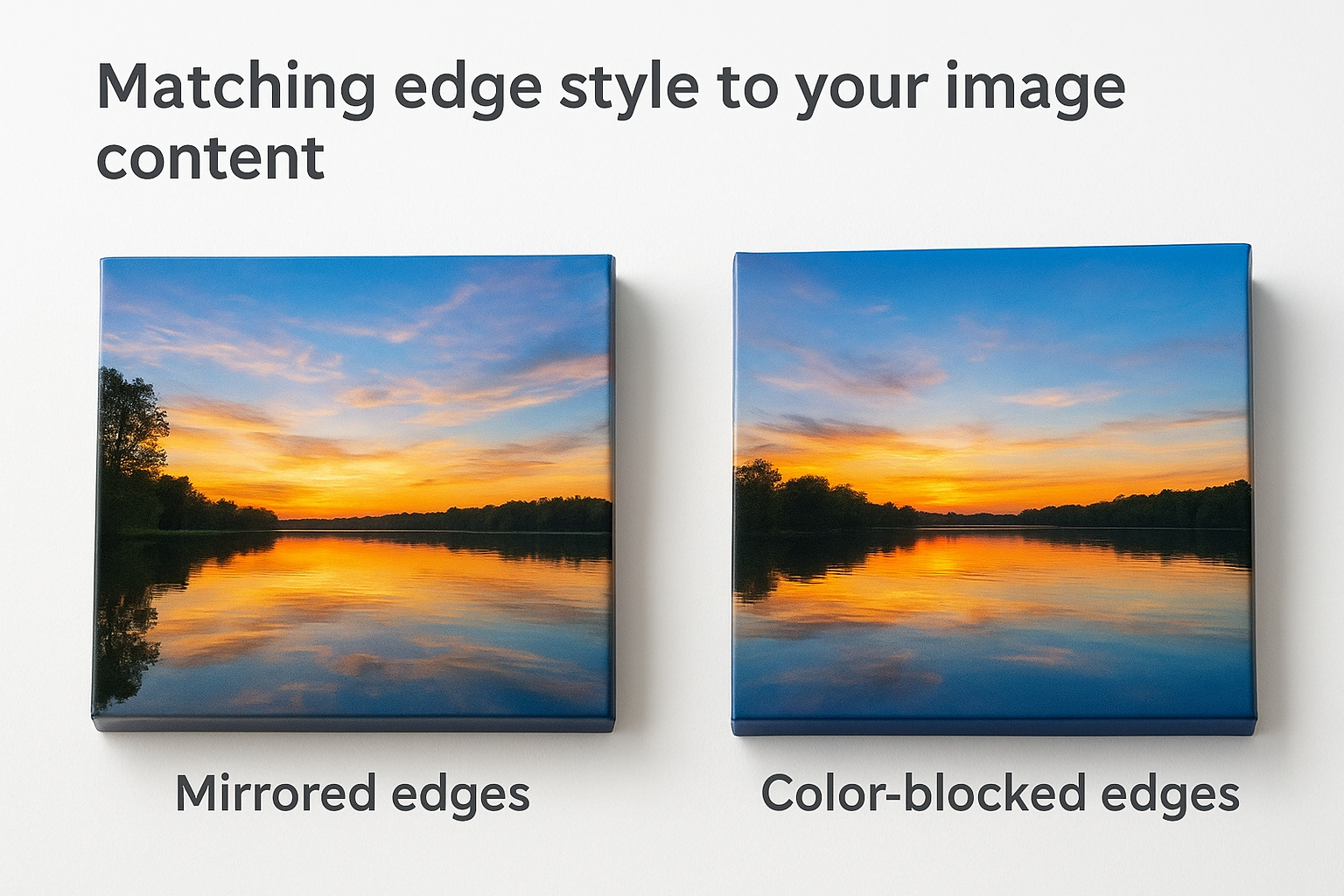
Choosing the wrong edge style for your image is one of the most common reasons a canvas print looks good in a preview but disappointing in person.
Here's a quick comparison to help you decide:
| Image type | Recommended edge style |
|---|---|
| Landscape with open sky | Mirrored |
| Portrait with tight crop | Color-blocked |
| Abstract or geometric | Color-blocked |
| Nature scene with gradual tones | Mirrored |
Preparing your image for a clean wrap
Before you finalize your order, check how much of your image will fold onto the sides. Most standard gallery wraps use 1.5 inches of canvas on each side for the wrap, so anything within that border zone disappears from the front face. If your image contains critical details near the edges, such as a subject's face or key text, move those elements toward the center before uploading.
Setting up your file with a safe zone that keeps all focal points well inside the outer edges saves you from having to reorder and ensures the piece looks exactly as intended once it's on your wall.
Framing and hanging a gallery wrapped canvas
One of the main advantages of understanding what is a gallery wrapped canvas is realizing that framing is optional rather than required. The wrap itself finishes the edges completely, which means you can hang the piece directly without sourcing a matching frame. That said, adding a frame is a legitimate design choice if your interior leans toward a more traditional aesthetic or if you want a visual border that separates the print from a busy wall.
Should you add a frame?
Adding a frame to a gallery wrapped canvas changes its personality considerably. A thin floating frame sits slightly away from the canvas edges, creating a small gap that gives the piece a layered, shadow-box effect. This works especially well with deeper stretcher bars because the contrast between the frame and the canvas edge adds visual interest.
A floating frame is the only framing style that complements a gallery wrap naturally, since it doesn't cover the finished edges you paid for.
If you choose this route, measure the total depth of your canvas before ordering a floating frame to confirm the frame accommodates the thickness without pinching the sides. Most gallery wrapped canvases with 1.5-inch or deeper bars pair well with a frame that has a rabbet depth of at least 1.75 inches.
Hanging without a frame
Most gallery wrapped canvases include a built-in hanging system on the back, which means you need only a single nail or hook in your wall. Start by deciding the exact height for your print: the center of the canvas should sit at roughly eye level, which for most rooms means the midpoint of the piece lands around 57 to 60 inches from the floor. For heavier or larger prints, use a wall anchor rated for the weight of your canvas to keep the piece secure over time.
Before you drive the nail, hold the canvas against the wall and step back to confirm placement. Adjusting position before committing saves unnecessary wall damage and gets your art centered correctly on the first attempt.
Key takeaways before you order
Now that you know what is a gallery wrapped canvas, the buying process gets simpler. The wrap method determines how your print looks from every angle, the frame depth controls visual presence, and the edge style needs to match your image content rather than contradict it. Deeper bars project further off the wall and create stronger shadow lines. Shallower bars sit flatter and suit casual spaces better.
Your image setup matters just as much as the material you choose. Keep focal points away from the outer edges to prevent critical details from disappearing onto the sides during the wrap. And remember, framing is optional since the finished edges already look complete on their own.
If you want a canvas print that arrives ready to hang with no extra hardware needed, browse the full collection at Yourwallarts and find a piece that fits your space from day one.